Minato-ku as a Third Place: Six Neighborhoods, Six Different Meanings of a Meal
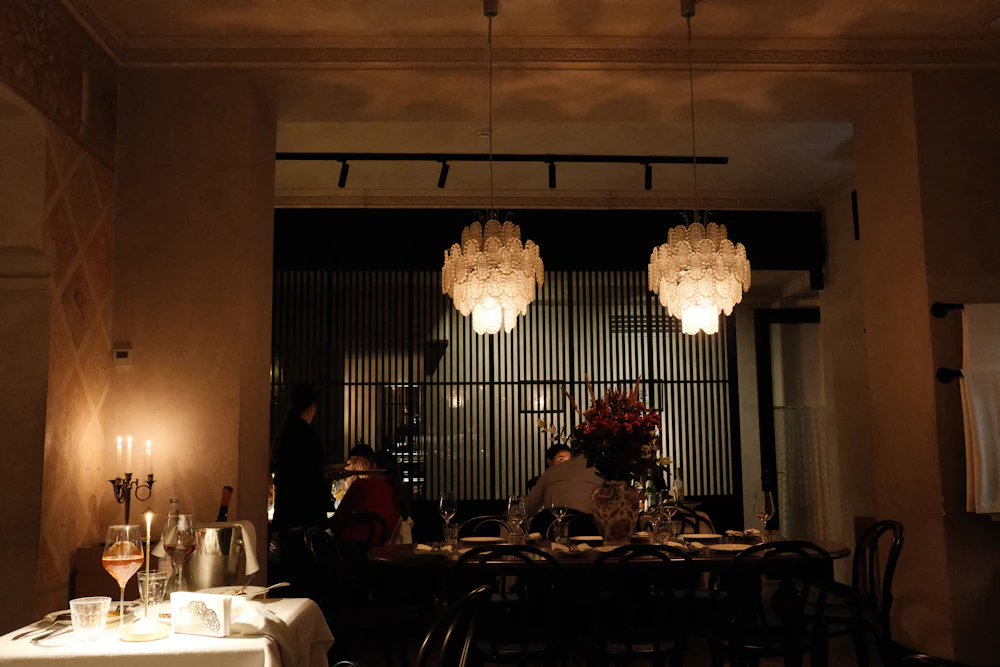
Minato-ku's restaurants split by purpose, not just cuisine — Azabujuban's neighborhood table, Akasaka's political dining, Roppongi's international crossroads — read through TPJ's seven axes.
In Minato-ku, what a meal means changes by neighborhood more than in almost any other part of Tokyo. In Azabujuban, dinner is a weekly habit tied to a four-century-old shopping street. In Akasaka, it's a venue for political and business conversation with a long-standing tradition of formal hospitality. In Roppongi, it's the point where several nationalities share a table without anyone treating that as unusual. Six neighborhoods, six distinct answers to the same question: what is food actually for here?
Why Minato-ku's Restaurants Split by Purpose
Understanding Minato-ku's dining scene starts with understanding what kind of ward it is.
Foreign embassies cluster in Moto-Azabu, Minami-Azabu, and Azabudai. National politics and bureaucracy sit close by at Akasaka and Nagatacho-Kasumigaseki. International finance and the arts concentrate in Roppongi. Upscale residential neighborhoods fill Shirokanedai and Hiroo. Because all of this coexists inside one ward boundary, Minato-ku's demand for food splits into distinct purposes rather than converging on one shared style: food as a tool of business hospitality for the political and financial world, food as daily infrastructure for longtime residents, food as international social ground for diplomats and expatriate professionals, food as quiet time secured for high-income households living nearby.
This is the third place condition Ray Oldenburg called "regularity" showing up at its most concentrated — a restaurant embedding itself into an entirely different rhythm of life depending on which corner of the ward it sits in. The question that actually determines where to eat here isn't "what cuisine," but "for whom, and for what purpose."
A Map of Minato-ku's Dining Cultures
Azabujuban — Dinner as a Neighborhood Habit
Azabujuban holds the ward's most food-as-daily-life register. Its shopping street, in continuous commercial operation for more than four hundred years, still supports fishmongers, tofu shops, and confectioners serving neighborhood households directly. Restaurants embedded in that same commercial fabric become weekly fixtures for nearby residents, embassy staff, and professionals — walking distance from Roppongi and Omotesando, yet largely untouched by their tourist traffic.
A more detailed look at Azabujuban's dining scene is available in Third Place Japan's Japanese-language guide to Azabujuban — an English version is planned.
Akasaka — Food as Political and Business Currency
Akasaka's restaurants carry the ward's deepest tradition of formal hospitality dining. Proximity to Nagatacho and Kasumigaseki gave the area a long history of politicians, bureaucrats, and media figures using meals as a venue for business that doesn't happen in a conference room. Traditional Japanese kaiseki dining still holds real weight here, and being able to secure a reservation at a particular Akasaka restaurant carries a social meaning that has little to do with the food itself.
Roppongi — Dinner as International Crossroads
Roppongi's restaurants draw the widest range of nationalities and industries to a single table anywhere in the ward. Embassy staff, international finance workers, and museum-goers overlap here, and a meal functions less as staged multiculturalism and more as an ordinary weeknight reality. For a visitor curious about Tokyo's international character, Roppongi's dining scene is usually the fastest entry point.
Shirokanedai and Hiroo — A Meal as Quiet Time
Shirokanedai and Hiroo hold Minato-ku's most residential dining register. Dense upscale housing supports restaurants built to be walked to on a weekly basis rather than sought out as a destination. Hiroo's unusually high concentration of foreign residents keeps multilingual service a matter of daily practice rather than special accommodation — it's ordinary here, not a gesture toward tourists.
Toranomon and Hamamatsucho — Business Dining on the Clock
Toranomon and Hamamatsucho form the ward's most efficiency-driven dining geography. Toranomon's business population has grown quickly with recent redevelopment, and Hamamatsucho's cluster of international hotels adds a steady flow of business travelers to its weekday lunch and dinner crowd. Efficient social dining, not formal hospitality, defines the register here — a working lunch or a quick dinner extension of a meeting.
Shinagawa — Dining Linked to International Hotels
Shinagawa's dining scene stands out for how closely it ties to hotel restaurants serving international travelers. Excellent access to Haneda Airport draws business travelers, inbound visitors, and international arrivals who choose Shinagawa as a base, and station-connected hotel dining answers to the odd hours that come with travel — a meal between connections, a meal before an early check-in, a late meal after a delayed arrival.
Who Is This Meal For? Choosing the Right Area
The right restaurant area in Minato-ku depends on one question: who is this meal actually for.
Building a neighborhood routine and regular status: Azabujuban and Shirokanedai-Hiroo reward patience. Low tourist traffic keeps regular status achievable within a handful of visits, and treating a restaurant like a nearby resident does is the fastest way into the ward's real dining culture.
Business, political, or industry context: Akasaka is close to the only serious option in the ward. Its tradition of kaiseki dining and formal hospitality carries weight that a newer restaurant elsewhere can't replicate.
International variety and easy multilingual service: Roppongi is the clearest entry point, with the ward's highest density of English-speaking staff and multinational clientele.
Quiet time, not spectacle: Shirokanedai and Hiroo, or Azabujuban's back streets, suit anyone looking for a restaurant to sink into rather than perform in.
Reading Minato-ku's Restaurants Through TPJ's Seven Axes
Comfort & Sensory Quality. Azabujuban, Shirokanedai, Akasaka, and Hiroo hold the ward's highest overall investment in material and craft. Shinagawa and Toranomon's hotel-linked dining delivers a more standardized high quality, consistent but less distinct in personality than a small independent room.
Quietness & Privacy. Azabujuban's back streets, Shirokanedai, Hiroo, and Akasaka's private-room restaurants rank highest. Roppongi varies sharply by venue and by night. Across the ward, one rule holds consistently: choosing a restaurant with a private room, or set one block off the main street, is the fastest route to quiet.
Specialness & Non-daily Experience. Akasaka and Azabujuban form two different poles of specialness. Akasaka's comes from social and political context — where you're dining and who else dines there. Azabujuban's comes from something more personal — the quiet specialness of a place that's become yours.
Story & Empathy for Background. Minato-ku's food history runs through Azabujuban's four-hundred-year-old shopping street, Akasaka's geisha-district and kaiseki heritage, and Roppongi's postwar international culture. Third Place Japan treats knowledge of that history as something that adds real depth to the dining experience itself, not background trivia.
Revisit & Continuity Value. Azabujuban, Shirokanedai, and Akasaka rank highest, sustained by high-frequency visits from nearby residents that build regular status quickly. Third Place Japan treats this density of return visits as one of the more important signals in evaluating a ward's dining as third place.
Record & Share Experience. Roppongi and parts of Azabujuban, along with Shinagawa's night-view hotel dining, tend to generate the strongest documentation impulse. Shirokanedai and Akasaka's more established rooms tend to favor depth of experience over photography.
Inbound & Multilingual Compatibility. Roppongi, Shinagawa, and Hiroo rank highest in the ward. Azabujuban leans toward natural accommodation for foreign residents rather than tourists specifically. Akasaka and Shirokanedai vary more, except where a restaurant specifically serves a foreign-resident clientele.
What Can Minato-ku's Food Scene Offer International Visitors?
Minato-ku offers international visitors a rare chance to experience Tokyo's dining diversity within a single ward.
Roppongi is the most approachable starting point — English-language service, multilingual menus, and an internationally mixed clientele keep the language barrier low. Shinagawa connects that same ease directly to Haneda Airport, functioning as a dining base for arrival, departure, or the hours in between.
Visitors interested in a more formal introduction to Japanese cuisine should look to Azabujuban or Akasaka, though with a caveat: Azabujuban rewards a visitor who treats it as a place to return to rather than a single stop, and Akasaka often assumes some familiarity with reservation norms and dress expectations.
Shirokanedai and Hiroo offer something different again — a chance to experience the ordinary daily dining of Tokyo residents rather than a staged visitor experience. For a longer stay, approaching Minato-ku's food scene from this neighborhood-first angle tends to produce the deepest experience of all.
Frequently Asked Questions
Q. Where should I start if I want a restaurant in Minato-ku that works as a third place?
Start with who the meal is for. A neighborhood routine points toward Azabujuban or Shirokanedai-Hiroo; business or political context points toward Akasaka; international variety points toward Roppongi; efficient after-work dining points toward Toranomon or Hamamatsucho. Within any of those areas, a restaurant with twenty seats or fewer tends to build regular status fastest.
Q. What's the difference between dining in Azabujuban and Akasaka?
Azabujuban values continuity — how many times you've come back determines the food's real value there. Akasaka values context — where you dined and who else was present carries the social weight. One is neighborhood life extended into a meal; the other is business and politics extended into one. Third Place Japan evaluates each area against its own version of what dining is for.
Q. Are Minato-ku's restaurants easy for international visitors to use?
It varies by area. Roppongi offers the ward's strongest English service and multilingual menus, making it approachable without any Japanese. Hiroo carries a similar ease shaped by its resident foreign population. Azabujuban and Akasaka see less tourist-oriented service, though restaurants used by nearby embassy staff frequently operate in English regardless.
Q. Which area in Minato-ku is quietest for a meal?
Shirokanedai-Hiroo and Azabujuban's back streets hold the ward's deepest quiet, and a private room at an Akasaka restaurant is a reliable alternative. Across the ward, a restaurant set one block off the main road or seating twenty or fewer tends to hold quiet regardless of neighborhood.
Q. How do I become a regular at a restaurant in Minato-ku?
Choose a small, independent restaurant — twenty seats or fewer — and return three to five times at a similar time of day. Staff in this ward tend to notice a repeat face quickly, and by the sixth to tenth visit, a real sense of "a place that knows you" tends to set in. Azabujuban and Shirokanedai-Hiroo are the areas where that familiarity builds fastest, since both see comparatively little tourist traffic to dilute it.
In Summary
Minato-ku's restaurants resist a single description because the ward never converged on one purpose for food — it holds six parallel answers side by side: Azabujuban's neighborhood habit, Akasaka's political and business currency, Roppongi's international crossroads, Shirokanedai-Hiroo's quiet residential meal, Toranomon-Hamamatsucho's efficient business dining, and Shinagawa's hotel dining tied to Haneda. Third Place Japan evaluates spaces like these across seven axes, and continues documenting each of Minato-ku's neighborhoods as a distinct dining third place in its own right.
Related reading: Minato-ku as a Third Place: How Embassies and International Finance Built Five Distinct Bar Cultures covers the same ward's other defining night-time layer. For a contrasting take on food shaped by daily life rather than international prestige, see Shinjuku-ku as a Third Place: Where Daily Life Shapes What Tokyo Eats.