Chuo-ku as a Third Place: Three Layers of Time on One Table
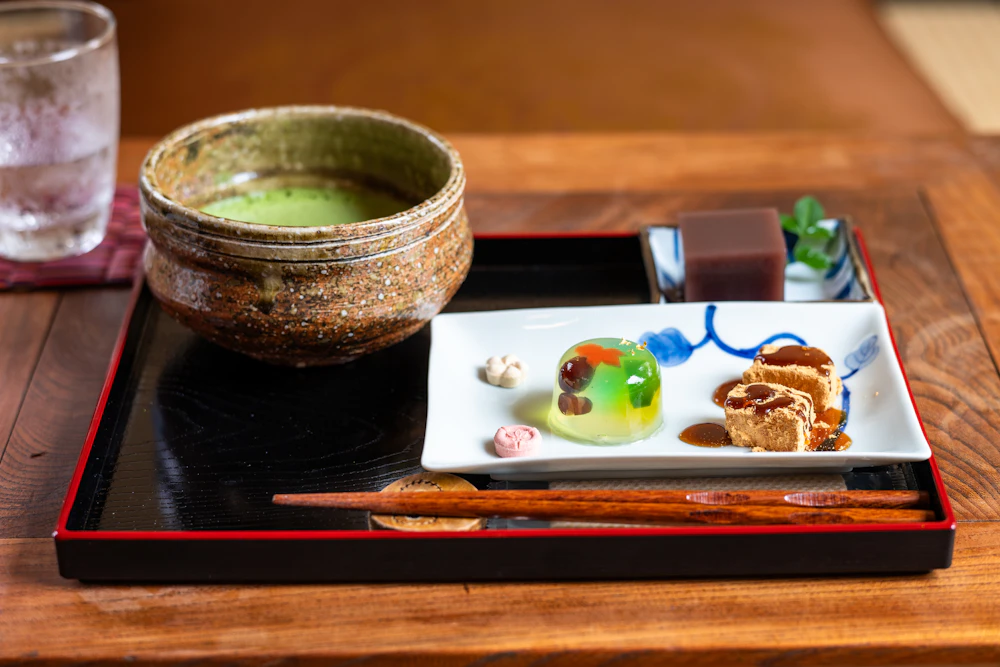
Chuo-ku's restaurants stack Edo-period ryotei tradition, Tsukiji's seafood-supply history, and Ginza's century of formal entertaining onto a single table — read through TPJ's seven axes.
No other Tokyo ward stacks quite this much culinary history onto a single table. Chuo-ku holds three layers at once: the ryotei tradition that flowered in Edo-period Nihonbashi and Ningyocho, Tsukiji's century as the city's seafood supply hub, and Ginza's long run as the stage for Japan's most formal entertaining. Choosing where to eat here means choosing which part of that history to sit inside.
Why Chuo-ku's Restaurants Carry Three Kinds of Time
Chuo-ku's connection to food goes back to the Edo period.
Edo-era food culture took shape around Nihonbashi and Ningyocho, where formal ryotei restaurants, delivery kitchens, and street stalls together fed everyone from commoners to the samurai class. Food functioned as cultural practice here well before that idea took hold elsewhere, and Ningyocho's Amazake Yokocho lane, along with restaurants that have run continuously since the Edo period, still carry that accumulation into the present. After the Meiji era, the market established at Tsukiji became central to how Tokyo sourced its food, and the neighborhood's connection to the bay by waterway made it the infrastructure behind fresh seafood reaching the city center — an influence that still shapes how restaurants across Tokyo think about ingredient quality. Ginza, meanwhile, functioned as the center of Japan's business-entertaining culture from the Meiji era through the postwar boom; choosing to dine in Ginza has long been a way of signaling respect to the person across the table, and that context still colors what a Ginza restaurant means to diners today.
Together, these three layers give Chuo-ku's restaurants a depth of time no other part of the city can substitute for.
How Restaurants Function as a Third Place in Chuo-ku
A Chuo-ku restaurant works as a third place through the experience of eating your way into a connection with Japanese food history.
Sociologist Ray Oldenburg's third place framework emphasizes conversation and exchange as the center of a space, and in Chuo-ku's established restaurants, individual dishes themselves become the subject of that conversation — a preparation method with roots in the Edo period, a seasonal ingredient's origin, a craftsman's technique passed to the next generation. Food functioning as the medium for conversation makes this a fundamentally different kind of third place than a café or bar, where coffee or alcohol usually plays that role.
Chuo-ku's restaurants also see strong demand as venues for milestone meals — birthdays, promotions, a closed deal, a family anniversary. Choosing a Chuo-ku restaurant for one of these occasions carries an implicit wish to give the moment real weight, and the ward holds an unusual density of rooms able to carry that weight.
Reading Chuo-ku's Restaurants Through TPJ's Seven Axes
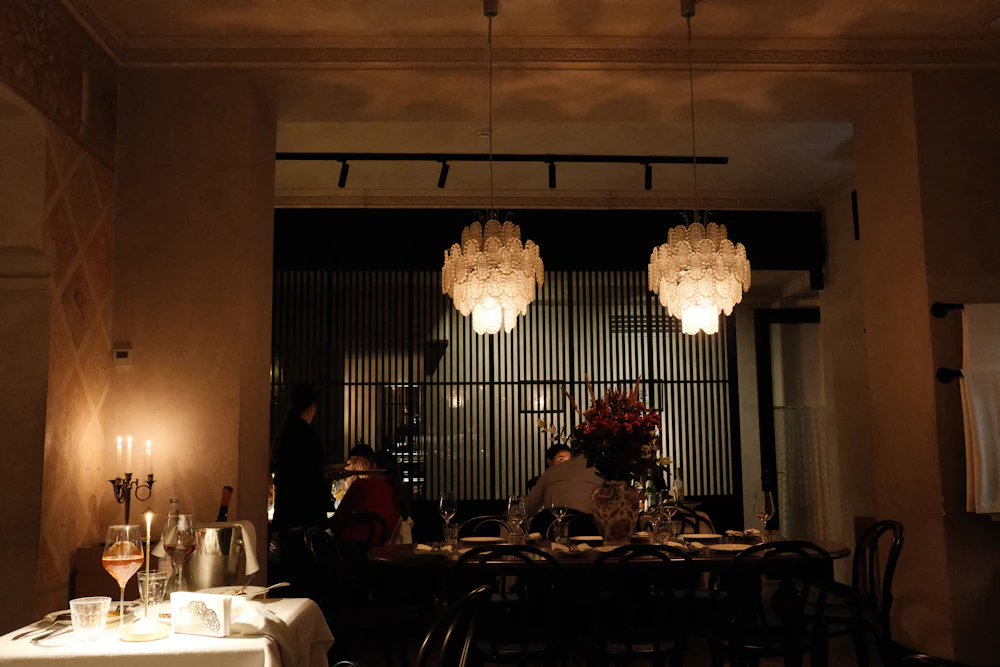
Comfort & Sensory Quality. In Chuo-ku's established restaurants, the aesthetics of the room and the food are designed together. Lacquer, ceramic, and wood are chosen to match the tableware, and the room's furnishings shift with the season. Comfort here isn't a static feature of the space — it's a dynamic experience produced by room, dish, vessel, and light working as one system, and Chuo-ku's oldest restaurants achieve this integration at its most complete.
Quietness & Privacy. Many of the ward's higher-tier restaurants are built around private or semi-private rooms — not simply for privacy, but to seal a meal off entirely from the outside world. That enclosed quiet functions as a device that deepens the weight of the time spent at the table, in a business dinner as much as a family milestone.
Specialness & Non-daily Experience. Eating in Chuo-ku carries a dimension beyond the meal itself: contact with something close to the mainstream of Japanese food culture. A seasonal expression folded into a single kaiseki course, technique refined over years of apprenticeship — encountering these turns the act of eating into cultural participation rather than simple consumption, a dimension that doesn't emerge in neighborhoods without this density of culinary accumulation.
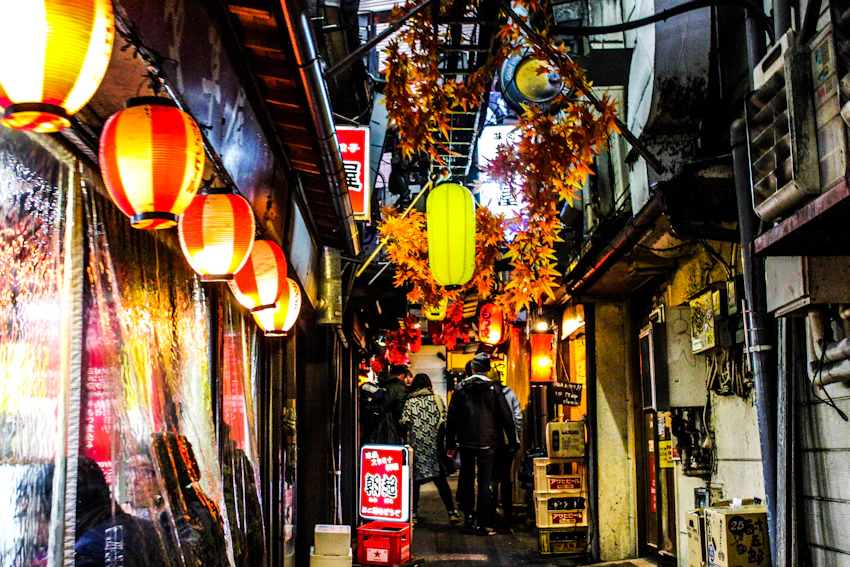
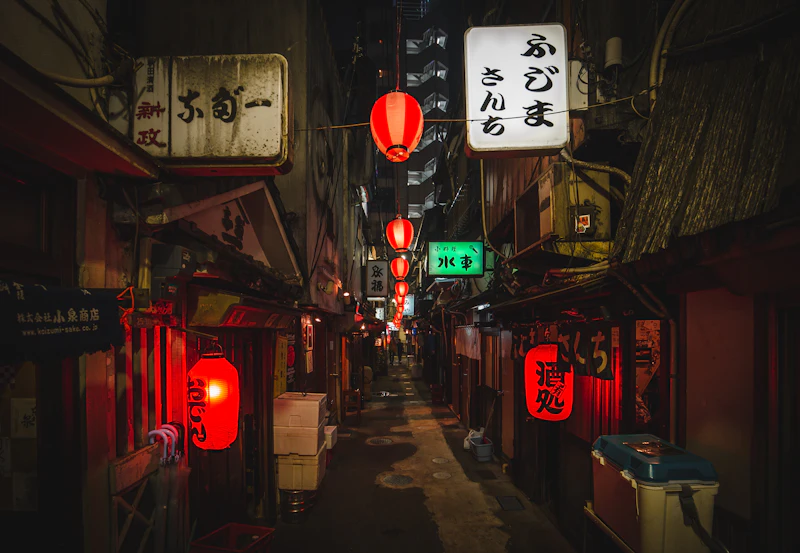
Story & Empathy for Background. Ningyocho's Amazake Yokocho still carries the memory of Edo-period food culture in its air. Nihonbashi's old-line ryotei restaurants carry a living history spanning a century or two past their founding. Tsukiji's market culture still shapes how nearby restaurants choose their ingredients. Chuo-ku's food story runs deeper than any single ward article can cover on its own — a continuous narrative from the Edo period to the present.
Revisit & Continuity Value. Seasonality is the essence of Japanese cuisine — bamboo shoots in spring, sweetfish in summer, matsutake in autumn, blowfish in winter. That rotation naturally builds a reason to return. Continuing to visit one of Chuo-ku's established restaurants means joining an annual cycle of experiencing the seasons through food, and a regular who returns across all four seasons is what gives a restaurant its real density as a third place.
Record & Share Experience. The aesthetic completeness of Japanese cuisine ties directly into a culture of documentation. A single dish on lacquerware, the contrast between a ceramic vessel's texture and a dish's color — these carry a visual completeness worth recording. "Kaiseki at a long-established Chuo-ku restaurant" carries meaning as a record precisely because the standing of the room and the beauty of the food reinforce each other.
Inbound & Multilingual Compatibility. Chuo-ku, home to the mainstream of washoku — the UNESCO-recognized Intangible Cultural Heritage cuisine registered in 2013 — functions as a high-level entry point into Japanese food for international visitors. English menus and multilingual staff are comparatively well established at Ginza and Nihonbashi's higher-tier restaurants, while Ningyocho's more accessible price points offer a different kind of value: the experience of downtown food culture.
How Do Chuo-ku's Dining Cultures Differ by Neighborhood?
Chuo-ku's food carries entirely different eras of memory and cultural context depending on which neighborhood you're in.
Ginza concentrates the pinnacle of Japanese cuisine, its dining scene held up by a culture of business entertaining and by lineages of sushi and kaiseki craftsmen still working today.
A more detailed look at Ginza's restaurant scene is available in Third Place Japan's Japanese-language guide to Ginza — an English version is planned.
Nihonbashi (area guide planned) pairs Edo-era ryotei tradition with a concentration of financial institutions, producing a dining culture built on formality and depth of time. Restaurants that have operated for more than a century still function here as living history, not relics.
Ningyocho (area guide planned) carries a different food culture entirely — the Amazake Yokocho lane and neighborhood institutions represent a downtown food culture distinct from Ginza and Nihonbashi's formality. This is where local regulars eat on ordinary days, not where entertaining happens.
Tsukiji and Tsukishima (area guide planned) build their dining identity around Tsukiji's market culture and Tsukishima's monjayaki tradition, centered on ingredient provenance and neighborhood food culture. Tsukishima in particular offers the most direct version of "eating as participation in local culture" anywhere in the ward.
What Should You Look for in a Good Restaurant in Chuo-ku?
Matching purpose to neighborhood is the clearest way to navigate Chuo-ku's four distinct dining cultures.
Match the neighborhood to your purpose. Ginza suits occasions that call for formal entertaining; Nihonbashi rewards an appreciation for old-line continuity; Ningyocho suits an experience of downtown food culture; Tsukiji and Tsukishima suit anyone drawn to ingredient provenance. Matching purpose and context determines how satisfying the experience will be.
Decide what kind of format you want. A sushi counter centers on one-to-one dialogue with the chef. A private kaiseki room centers on the passage of time and a seasonal experience. Deciding which one you need is the first real choice in using a Chuo-ku restaurant as a third place.
Consider whether you're building a relationship or having a single experience. Whether you're visiting once for a special occasion or returning each season as a regular changes how you should choose a restaurant. Building continuity — exchanging a few words with staff at each reservation, sharing your preferences, returning with the seasons — is what makes the third place function actually work.
Check inbound-specific details in advance. English menus, how thoroughly a course gets explained, and allergy accommodation are worth confirming ahead of time. Ginza and Nihonbashi's higher-tier restaurants are comparatively well prepared; some of Ningyocho and Tsukiji's more casual spots operate in Japanese only.
Chuo-ku's Place in Tokyo's Food Landscape
Seen across Tokyo, Chuo-ku occupies a genuinely distinct position in the city's food culture. Shibuya-ku's dining scene changes constantly, driven by diversity and who you're eating with; Minato-ku's leans on international prestige and luxury branding. Where those wards build dining around a contemporary expression of lifestyle, Chuo-ku holds its position through the sheer depth of time behind Japanese food itself — Edo-period ryotei tradition, Tsukiji's ingredient-supply history, Ginza's entertaining culture, three layers stacked into one administrative ward.
What Chuo-ku's Restaurants Offer International Visitors
Washoku ranks among the experiences international visitors most anticipate from a trip to Japan, and Chuo-ku, home to its historical mainstream, functions as a place to experience that cuisine's deepest layer.
A kaiseki meal at a Ginza or Nihonbashi restaurant integrates ingredient, technique, room, and vessel into a single expression of Japanese culture. Ningyocho's Amazake Yokocho and its downtown-style restaurants offer a different kind of firsthand experience — the everyday richness of Japanese food culture rather than its formal peak. Third Place Japan evaluates whether international visitors can actually use these restaurants comfortably, weighing multilingual support, ease of reservation, and the clarity of a course's explanation.
Frequently Asked Questions
Q. How is dining in Chuo-ku different from other parts of Tokyo?
Chuo-ku stacks three layers of history onto a single ward: Edo-period ryotei tradition, Tsukiji's ingredient-supply history, and Ginza's entertaining culture. Where Shibuya-ku's food scene runs on relationships and trend, and Minato-ku's on international prestige, Chuo-ku's core is the sheer depth of time behind Japanese food itself.
Q. Which neighborhood in Chuo-ku is best for a business dinner?
Ginza and Nihonbashi are the ward's centers for formal entertaining. Ginza holds the pinnacle of Japanese cuisine alongside a deep culture of business dining; Nihonbashi pairs old-line ryotei tradition with a concentration of financial institutions. Both neighborhoods carry a standing that itself signals respect to a dining companion.
Q. What makes Ningyocho's food culture distinctive?
Ningyocho still supports the Amazake Yokocho lane, a shopping street with roots in the Edo period, and a downtown food culture built on neighborhood regulars rather than formal entertaining. It's the ward's clearest example of food as an everyday, lived-in third place rather than a special occasion.
Q. How would you describe Chuo-ku's food culture to an international visitor?
Chuo-ku holds the deepest layers of Japanese food history found anywhere in Tokyo — Edo-period ryotei tradition, Tsukiji's market history, and Ginza's entertaining culture. A Ginza kaiseki course offers the pinnacle experience of Japanese cuisine, while Ningyocho's downtown food offers the everyday richness of the same tradition — two distinct, equally genuine introductions to washoku.
Q. How do I become a seasonal regular at a restaurant in Chuo-ku?
Timing visits to the seasons is the most natural route — spring bamboo shoots, summer sweetfish, autumn matsutake, winter blowfish each give you a reason to return. Exchanging a few words with staff each season and sharing your preferences deepens the relationship until you're recognized as a regular of that particular table.
In Summary
Chuo-ku's food culture compresses three layers of history — Edo-period ryotei tradition, Tsukiji's ingredient-supply legacy, and Ginza's culture of entertaining — into a single administrative ward, forming the deepest layer of time in Japanese dining found anywhere in Tokyo. Ginza, Nihonbashi, Ningyocho, and Tsukiji-Tsukishima each hold an entirely different version of a dining third place: formal entertaining, old-line continuity, downtown ease, and ingredient provenance. Third Place Japan evaluates spaces like these across seven axes, and continues documenting each of Chuo-ku's neighborhoods as a distinct dining third place in its own right.
Related reading: Chuo-ku as a Third Place: The Merchant City That Built Japan's Bar Tradition covers the same ward's other defining layer — a night-time culture built on the same continuity — and Chuo-ku as a Third Place: Staying at the Geographic Center of Tokyo covers how that same historical weight shapes a stay. For a contrasting take on dining shaped by international prestige rather than centuries of continuity, see Minato-ku as a Third Place: Six Neighborhoods, Six Different Meanings of a Meal.