What Is a Third Place? The TPJ Guide to Japan's Concept of Ibasho

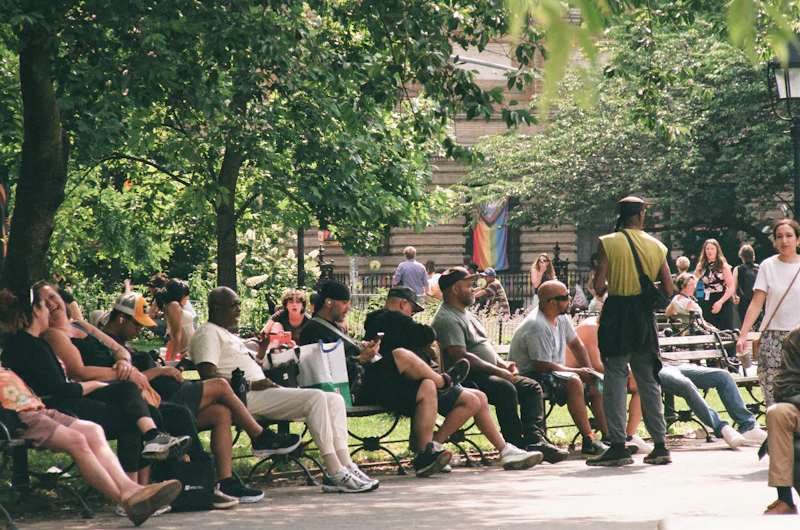
A third place is any space beyond home and work where people gather informally, regularly, and freely. The concept was coined by sociologist Ray Oldenburg in his 1989 book The Great Good Place. Third Place Japan (TPJ) evaluates and certifies spaces across Japan that fulfill this function — and adapts Oldenburg's framework to Japan's distinct cultural context, including the concept of ibasho.
The question "where do you go to be yourself?" is not merely about geography. It is about the conditions under which people feel at ease — neither performing nor retreating. Third places are the answer to that question, and their presence (or absence) shapes the quality of daily life more than most people recognize.
Oldenburg's Definition: The Eight Characteristics
Oldenburg identified eight characteristics shared by great third places:
- Neutral ground — Neither host nor guest; participants choose to be there
- Leveling — Social rank is left at the door; status does not define participation
- Conversation is the main activity — The primary engine of the space is talk (or its productive absence)
- Accessibility — Easy to reach, open at convenient hours, no membership required
- Regulars — The space has habitual visitors who give it its character
- Low profile — Unpretentious; not glamorous or exclusive
- Playful mood — Wit and banter; the atmosphere is warm, not solemn
- A home away from home — Psychological comfort, warmth, belonging
No single space scores perfectly on all eight. But the best third places score well enough on enough of them to create something qualitatively different from a mere commercial transaction.
From America to Japan: What Changes
Oldenburg wrote from an American context — specifically, his observation that post-war suburban development had eliminated the informal gathering spaces that had long given communities their texture. The argument was that without third places, social life atrophies and isolation grows.
Japan arrived at the same concern from a different direction. The post-war economic miracle produced a work culture of extreme intensity, in which the boundary between professional and social identity nearly dissolved. The office became a second home; colleagues became primary community. But as that model has frayed — through structural unemployment, remote work, an aging population — the question of where people belong outside of work has become urgent.
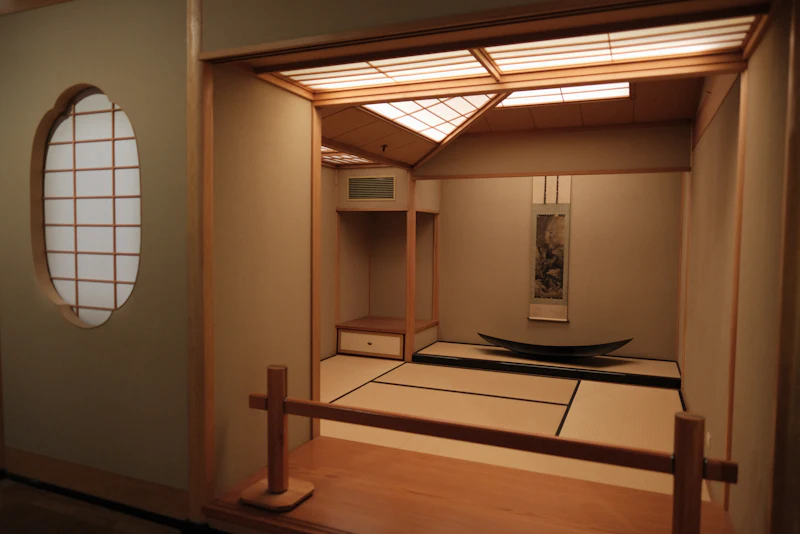
Japan also has its own vocabulary for this. Ibasho (居場所) — literally, "a place where one can be" — captures something close to, but not identical with, Oldenburg's third place. Where Oldenburg emphasized the social function of gathering, ibasho emphasizes the individual's sense of being accepted, at ease, and unrequired to perform. A person can find ibasho in a quiet café alone; Oldenburg might not have counted that as a third place.
Third Place Japan deliberately bridges these two frameworks. Our seven-axis evaluation includes both social and individual dimensions of the third-place experience.
The TPJ Seven-Axis Framework
Third Place Japan evaluates spaces across seven axes, each scored out of 10:
| Axis | What It Measures |
|---|---|
| Comfort & Space Quality | Materials, lighting, acoustics, temperature — the physical conditions of ease |
| Silence & Privacy | Noise level, seat spacing, visual separation — conditions for individual focus |
| Specialness & Non-Everyday Quality | The degree to which the space creates a sense of departure from the ordinary |
| Story & Heritage | The depth added to experience by knowing the space's history and intention |
| Revisit Value | The pull toward returning — consistency, evolution, the rhythm of regular use |
| Record & Share Experience | The quality of the space as something worth documenting and recommending |
| Inbound & Multilingual Access | The degree to which the space is navigable and welcoming to international visitors |
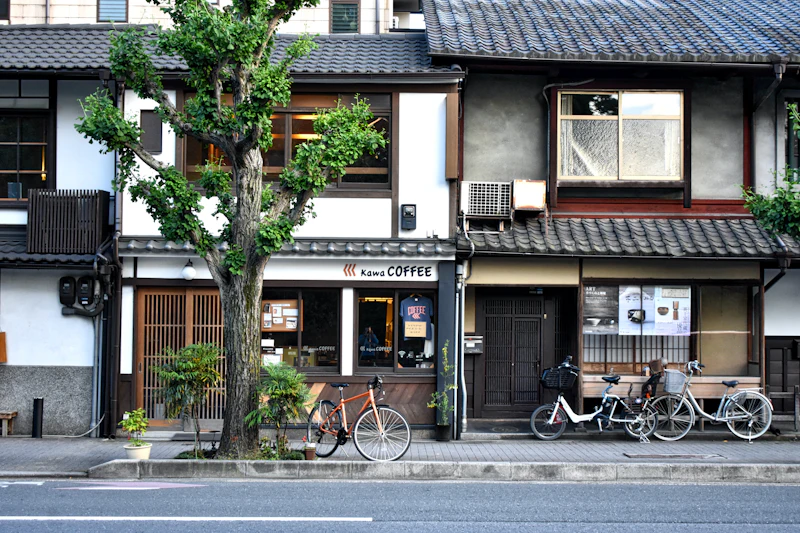
These axes are not equally weighted in all contexts. A contemplative shrine may score low on social axes and high on silence and story. A neighborhood café may score low on specialness and high on revisit value and regulars. The certification framework takes the full profile into account.
Third Places in the Modern Context
Several forces are reshaping the third-place landscape in Japan and globally:
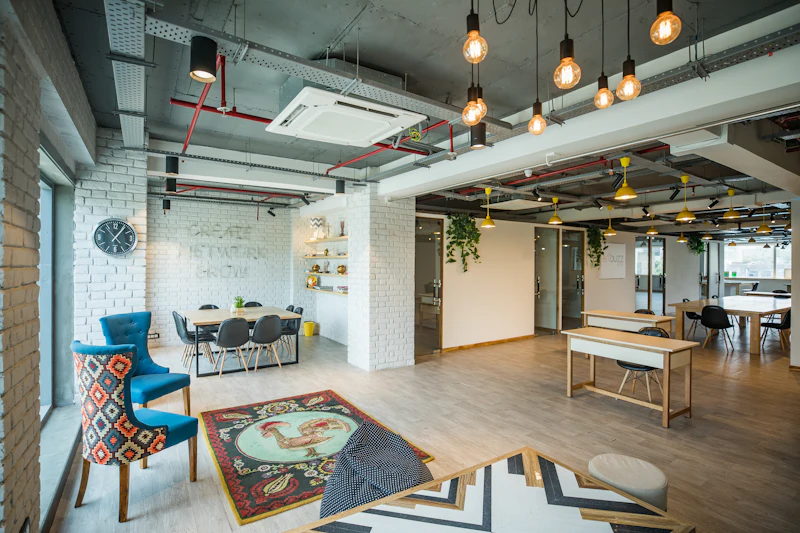
Remote work: The decoupling of work from office has pushed people into cafés, libraries, and coworking spaces. Spaces that once served leisure now serve labor. This changes their character — and the quality of the third-place experience they provide.
Post-COVID social recalibration: The pandemic interrupted habitual third-place use. Many regulars did not return; many spaces closed. The rebuilding of third-place habits is still underway.
The AI era and the question of presence: As digital interaction becomes more seamless, physical presence — being somewhere specific — acquires new weight. The choice of "where to be" becomes more deliberate when anywhere is possible.
Loneliness as a public health concern: Japan has a Minister of Loneliness. The UK appointed one in 2018. Third places are not merely pleasant; evidence suggests they are important to mental health, social cohesion, and resilience.
Third Place Japan was established in this context: not as a lifestyle brand, but as an attempt to document and sustain the spaces that matter.
FAQ
Q. What is the difference between a third place and just a nice café?
A nice café is a place you enjoy visiting. A third place is a place you return to habitually, where you feel at ease, and where your presence is part of the fabric of the space. The difference is not in the quality of the coffee but in the relationship between the visitor and the space over time. Third Place Japan evaluates both dimensions.
Q. Does a third place have to be social?
By Oldenburg's original definition, yes — conversation is central. But in the Japanese context, solo presence in a shared space can be fully third-place in character. Our framework includes axes (silence, privacy, revisit value) that capture the quality of solo third-place experience.
Q. What does TPJ certification mean?
A TPJ-certified space has been evaluated against our seven-axis framework and found to meet the standard across multiple dimensions. Certification does not mean the space is perfect — it means it has been evaluated honestly and found to function as a genuine third place. See certified venues for the full list.
Q. How is Japan's ibasho different from a Western third place?
Ibasho emphasizes the individual's sense of being accepted — of not needing to perform or justify one's presence. A Western third place is more explicitly social. In practice, the best spaces satisfy both: they welcome solo visitors and create the conditions for organic social connection, without requiring either.