Chiyoda-ku as a Third Place: One Ward, Three Kinds of Room

Chiyoda-ku's cafés split into three unrelated worlds — Marunouchi's corporate prestige, Jimbocho's secondhand-book stillness, Akihabara's fan-community intensity — read through TPJ's seven axes.
Ask ten different people to picture "a café in Chiyoda-ku," and you'll likely get ten different images. Some picture a polished coffee bar inside a Marunouchi tower. Others picture a quiet café tucked into Jimbocho's secondhand-book district. Still others think first of a hobby-focused community café in Akihabara. That inability to settle on one image is the point — this ward holds three genuinely unrelated café cultures inside a single administrative boundary, more than almost anywhere else in Tokyo.
Why Chiyoda-ku's Cafés Split Into Three Unrelated Worlds
Chiyoda-ku's multiplicity traces back to how the ward itself came together.
Centered on the Imperial Palace, Chiyoda-ku formed as Edo Castle's surrounding territory. The Edo-period merchant quarter that grew up around the castle — the Kanda and Jimbocho direction — sits alongside a business district planned methodically since the Meiji era (Marunouchi, Otemachi), and an area that developed its own identity as an electronics district during the postwar boom before becoming something else entirely (Akihabara). These three zones sit adjacent to one another yet remain culturally distinct — a structure found nowhere else in Tokyo. Walk twenty or thirty minutes in any direction and you cross between a capital's symbolic prestige, the world's largest concentration of secondhand bookshops, and one of the planet's great pop-culture hubs.
Cafés reflect a neighborhood's character more directly than almost any other kind of business. A café's basic openness — anyone can walk in — means it absorbs whatever cultural gravity surrounds it and converts that gravity directly into the character of the room. Marunouchi's cafés carry the prestige of capital function; Jimbocho's carry the stillness of accumulated knowledge; Akihabara's carry the heat of a fan community. Each neighborhood's café functions as a distillation of what the street outside is actually about.
How Cafés Function as a Third Place in Chiyoda-ku
Chiyoda-ku's cafés function as a third place through three distinct patterns, one for each neighborhood.
Ray Oldenburg's neutrality — belonging to neither home nor workplace — takes three separate forms here: neutral ground built on prestige, neutral ground built on shared intellectual life, and neutral ground built on fandom. The Marunouchi pattern offers a working neutral ground shaped by prestige: sitting next to the seats of power in Kasumigaseki, Otemachi, and Nagatacho without belonging to any of them, offering one uncommitted cup of coffee at a time. The Jimbocho pattern offers a neutral ground for introspection amid accumulated knowledge: surrounded by one of the world's largest concentrations of secondhand bookshops, a place to read, think, and prepare for whatever comes next. The Akihabara pattern offers a neutral ground of belonging without exposure: people who share a common cultural language — cosplay, games, anime — gather while still keeping the ease of someone who's only there today.
Having all three patterns coexist inside a single administrative ward is what makes Chiyoda-ku's cafés, as a set, resist any single description.
Reading Chiyoda-ku's Cafés Through TPJ's Seven Axes
Comfort & Sensory Quality. Comfort in a Chiyoda-ku café tends to track how closely the room's design matches its neighborhood's cultural gravity. Marunouchi favors the calm of formal materials and considered lighting; Jimbocho favors the book-lined hush of a study; Akihabara favors the heat and welcome of a room full of people who share your interests. Each register is entirely different, but the strongest examples across all three share one thing: the design matches the neighborhood it's in.
Quietness & Privacy. Three distinct kinds of quiet exist here. Jimbocho's bookshop cafés offer a quiet built for thought and reading — low ambient sound, long stays assumed, everyone around you there for a similar reason. Marunouchi's tower cafés offer a moderate ambient hum suited to business focus. Akihabara's cafés offer a different kind of privacy entirely — shared cultural context with strangers, paired with no interference in anyone's personal space.
Specialness & Non-daily Experience. Specialness in Chiyoda-ku comes from choosing which cultural gravity you want to stand inside for the day. An hour at a coffee shop facing the Imperial Palace; an afternoon in a Jimbocho café after browsing secondhand bookshops; time shared with a fan community in Akihabara — each is a genuinely different kind of non-daily experience. The ability to choose your register is itself the core of what makes this axis distinctive here.
Story & Empathy for Background. The ground beneath Chiyoda-ku's cafés carries layered modern history. Jimbocho's bookshop district descends in an unbroken line from a Meiji-era student quarter; Marunouchi's planned city stands as a symbol of Meiji-government and Mitsubishi-driven modernization; Akihabara shifted from a postwar electronics district into a global pop-culture hub within living memory. Which era's history you're standing inside adds real depth to the experience, and few wards anywhere in Tokyo carry this many distinct historical layers within walking distance of each other.
Revisit & Continuity Value. Revisit value takes a different shape in each neighborhood. Jimbocho rewards a habit of returning between bookshop browsing sessions. Akihabara rewards returning alongside the same fan community, where recognition builds around shared interest rather than personal history. Marunouchi rewards a routine tied to work — the coffee stop before or after a meeting, repeated often enough to become part of the rhythm of a workday.
Inbound & Multilingual Compatibility. Marunouchi and Otemachi's cafés tend to carry comparatively strong English menus and service, suited to a "Tokyo business district café" experience. Akihabara's cafés carry extensive English and Chinese signage and use pop culture itself as a non-verbal shared language that builds community across nationalities. Jimbocho, built primarily around Japanese-language secondhand books, carries more of a language barrier, but the experience of sitting inside the world's largest concentration of secondhand bookshops offers international visitors a discovery unavailable anywhere else.
How Do Chiyoda-ku's Café Cultures Differ by Neighborhood?
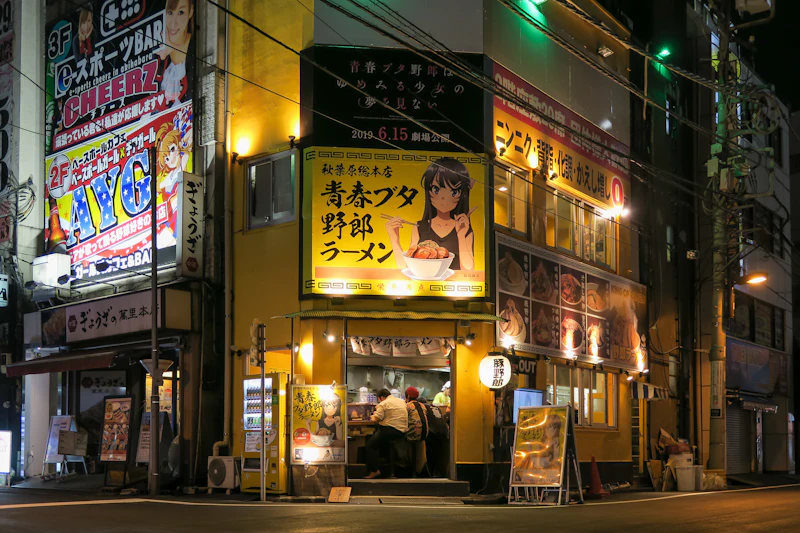
Akihabara shifted from an electronics district into a hub for anime, games, and hobby culture, and its cafés form communities built purely around shared interest — the polar opposite of Marunouchi's cultural register within the same ward.
A more detailed look at Akihabara's café scene is available in Third Place Japan's Japanese-language guide to Akihabara — an English version is planned.
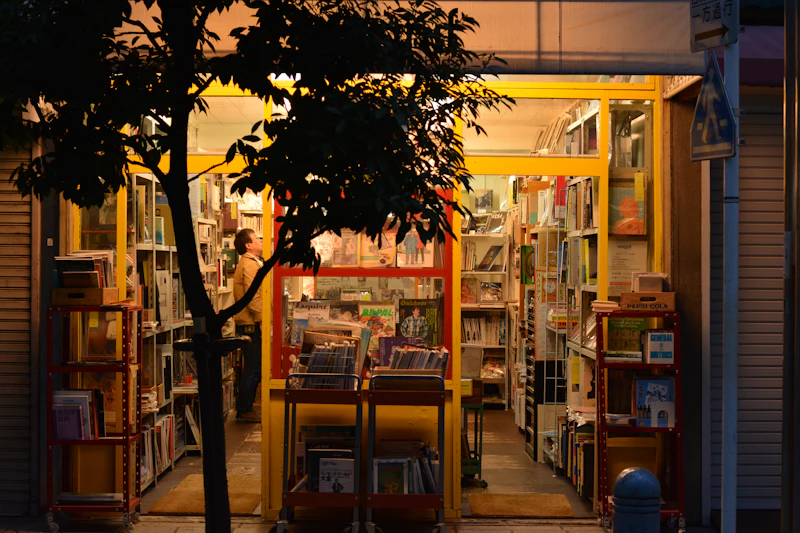
Jimbocho, known as the world's largest secondhand-book district, gives its cafés a distinct function: a place for introspection amid accumulated knowledge. The cycle of secondhand books, publishing, and universities completing itself within the same neighborhood positions its cafés as a rest stop attached to an enormous shared library.
A more detailed look at Jimbocho's café scene is available in Third Place Japan's Japanese-language guide to Jimbocho — an English version is planned.
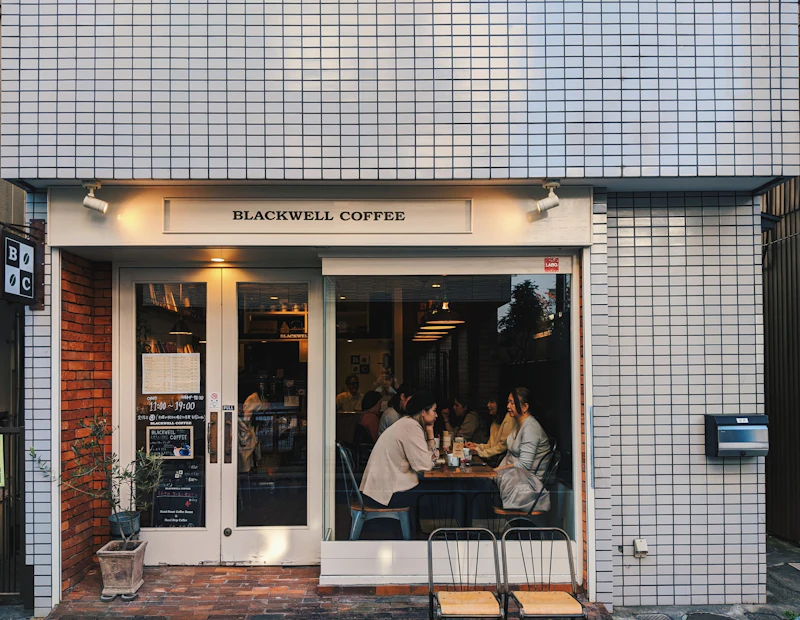
Marunouchi (area guide planned) functions, in the context of its Imperial Palace-adjacent, Meiji-planned prestige, as working neutral ground shaped by that prestige. Specialty coffee bars inside high-rise towers, and cafés positioned to look out over the Imperial Palace East Gardens, offer a "coffee within prestige" experience unavailable in any other neighborhood.
Kudanshita and Iidabashi (area guide planned), close to the Nippon Budokan, Chidorigafuchi, and Yasukuni Shrine, carry the most everyday café culture in the ward — not prestige, not knowledge, not fandom, but a quiet fixed point for the people who live and work nearby.
What Should You Look for in a Good Café in Chiyoda-ku?
Matching your purpose to the right neighborhood's cultural gravity is the single most important decision in choosing a café in Chiyoda-ku.
Match the neighborhood to your purpose. Jimbocho suits focused thinking and reading; Marunouchi suits a formal coffee break tied to work; Akihabara suits relaxing inside a fan community's atmosphere. In Chiyoda-ku, deciding which neighborhood to visit tends to come before deciding which café.
Consider whether you're settling in or passing through. Jimbocho's cafés are frequently designed for long, introspective stays; Marunouchi's coffee bars tend to assume a brief, work-oriented visit. Akihabara sits in between, with both time-limited drink-bar formats and open-ended cafés coexisting.
Plan the café around the neighborhood walk itself. The quality of a Chiyoda-ku café experience connects closely to what you do around it — a cup after browsing Jimbocho's secondhand bookshops, a rest after walking Akihabara's electronics district, a coffee after strolling the Imperial Palace East Gardens near Marunouchi. Many of the ward's best cafés function as a destination at the end of a walk, not a standalone stop.
Chiyoda-ku's Multiple Faces in Tokyo's Café Landscape
Seen across the city, Chiyoda-ku shows the widest range of café character of any Tokyo ward. Shibuya-ku's cafés run on a comparatively unified axis of trend and lifestyle sensibility; Shinjuku-ku's on the mix and energy of its entertainment districts; Chuo-ku's on merchant prestige and old-line continuity. Each of those wards holds a broadly consistent cultural character.
Chiyoda-ku alone holds three genuinely unrelated axes — prestige, knowledge, and fandom — where a café's character shifts entirely by neighborhood. This is the hardest ward in Tokyo to describe under a single label, which is exactly the value it offers anyone looking for a range of distinct third places within a single walk.
What Chiyoda-ku's Cafés Offer International Visitors
For international visitors, Chiyoda-ku's cafés work as the endpoint of two entirely different sightseeing routes: an Imperial Palace visit, and an anime or gaming pilgrimage.
Marunouchi and Otemachi's coffee bars offer comparatively strong English menus and service, delivering a clear "Tokyo business district" café experience. Akihabara's cafés carry extensive English and Chinese signage, and pop culture itself functions as a non-verbal shared language that builds cross-national community without requiring fluency in Japanese. Jimbocho carries more of a language barrier, being built primarily around Japanese-language secondhand books, but the experience of sitting inside the world's largest concentration of secondhand bookshops is, for many international visitors, a genuine discovery unavailable anywhere else.
Frequently Asked Questions
Q. What's the atmosphere like at a specialty coffee café in Chiyoda-ku?
It depends entirely on the neighborhood. Marunouchi's tower cafés lean toward a stylish, urban roastery feel; Jimbocho's lean toward a calm coffee shop woven into a secondhand-book district; Akihabara's lean toward a community-style café aligned with subculture. Which neighborhood you choose changes the coffee experience completely.
Q. Is there a café in Chiyoda-ku for a long, quiet stay?
Jimbocho's cafés carry a strong culture of reading through a long afternoon, and many are designed for exactly that kind of stay. Set among the world's largest concentration of secondhand bookshops, the neighborhood offers a dense cluster of cafés built for reading, introspection, and quiet work.
Q. Who is Akihabara's café scene suited for?
Anyone with an affinity for anime, games, hobby culture, or cosplay finds Akihabara's cafés functioning as a genuine community third place. The comfort of being around others who share your interest is distinctive, and themed cafés here draw strong interest from international visitors as well.
Q. How is Chiyoda-ku's café culture different from Shibuya-ku or Shinjuku-ku's?
Shibuya-ku's core is trend and lifestyle sensibility; Shinjuku-ku's is the mix and energy of its entertainment districts. Chiyoda-ku holds three genuinely unrelated café cultures — prestige (Marunouchi), accumulated knowledge (Jimbocho), and fandom (Akihabara) — inside one ward, with the character of a café shifting completely depending on which neighborhood you're in.
Q. Are Chiyoda-ku's cafés easy for international visitors to use?
It varies sharply by neighborhood. Marunouchi and Otemachi's tower cafés carry strong English service; Akihabara carries extensive multilingual signage and uses pop culture as a shared, non-verbal language. Jimbocho carries more of a language barrier, being built around Japanese secondhand books, but the experience of its bookshop-lined streets offers a distinct value found nowhere else for visitors willing to explore it.
In Summary
Chiyoda-ku's café culture resists a single description because the ward never converged on one identity — it holds three genuinely unrelated cultural registers side by side: Marunouchi's prestige, Jimbocho's accumulated knowledge, and Akihabara's fan-community intensity. Which neighborhood you step into changes the entire meaning of sitting down for a cup of coffee. Third Place Japan evaluates spaces like these across seven axes, and continues documenting each of Chiyoda-ku's neighborhoods as a distinct third place in its own right.
Related reading: Chiyoda-ku as a Third Place: Staying Next to the Nation Itself covers the same ward's hotel lounge culture, built on the Imperial Palace's symbolic prestige. For a contrasting take on dining culture built around one ward's international identity rather than three competing registers, see Minato-ku as a Third Place: Six Neighborhoods, Six Different Meanings of a Meal.