Chiyoda-ku as a Third Place: Staying Next to the Nation Itself
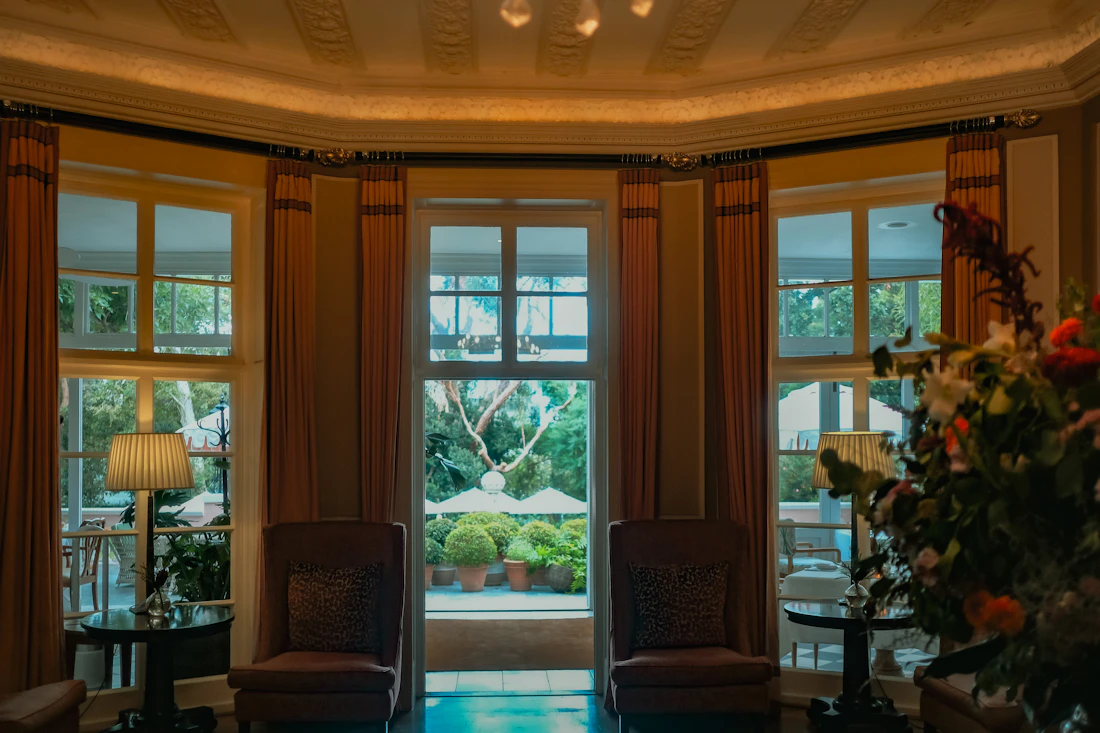
Chiyoda-ku's hotel lounges sit beside the Imperial Palace and the ministries that run the country — a third axis of prestige built by state planning, not commerce, read through TPJ's seven axes.
A stay in a Chiyoda-ku hotel lounge carries a kind of prestige found nowhere else in Tokyo. The Imperial Palace sits at the ward's center, and the ministries that run the country — foreign affairs, finance, the cabinet office — cluster within walking distance. This isn't the prestige commerce built over centuries, or the polish international capital brings. It's a third kind entirely: a capital's symbolic weight, deliberately planned into being by the Meiji government.
Why Chiyoda-ku's Hotel Lounges Carry a Different Kind of Weight
Chiyoda-ku's geography developed through a process unlike any other part of Tokyo.
Edo Castle was built in 1457 by Ota Dokan, and Tokugawa Ieyasu's arrival in 1590 made it the seat of Japanese power for the next two and a half centuries. After the Meiji Restoration, the castle grounds became the Imperial Palace — a green expanse covering roughly 14% of the ward that still anchors its geography today. Add the Imperial Palace East Gardens and Kitanomaru Park, and Chiyoda-ku's center holds a scale of green space unmatched anywhere else in central Tokyo.
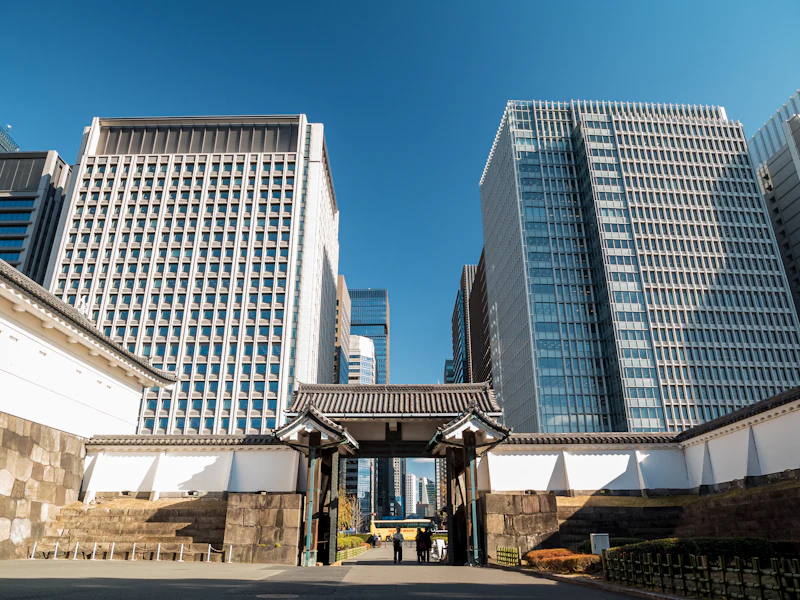
That geography gives the ward's hotel lounges a distinct visual value. Sitting in the middle of the city while the Imperial Palace's greenery fills your view is a different kind of non-daily experience than the high-rise panoramas Shibuya-ku or Shinjuku-ku's hotels sell. The contrast between Otemachi and Marunouchi's towers and the palace grounds beside them functions as a cityscape found nowhere else in Tokyo.
The ministry district's formation was itself a matter of policy — the Meiji government deliberately concentrated the central ministries around the seat of national power, shaping the district running from Kasumigaseki to Nagatacho. This planning, not organic commercial growth or foreign capital moving in, is what separates Chiyoda-ku's prestige from every other ward's.
How Hotel Lounges Function as a Third Place in Chiyoda-ku
Chiyoda-ku's hotel lounges function as a third place through a two-layer structure: a working space for business, and a space carrying symbolic prestige.
Ray Oldenburg's concept of neutrality takes an unusual shape here. Otemachi and Marunouchi hold one of Japan's largest concentrations of corporate headquarters; Kasumigaseki holds the central ministries. Sitting between those two centers of power, a hotel lounge functions as neutral ground belonging to neither — a place where it doesn't matter whether today's meeting partner works for a ministry or a corporation, because the room treats them as equals.
On revisit and regular status, Chiyoda-ku's hotel lounges lean toward functioning as a fixed point returned to on each trip, rather than daily belonging. Marunouchi and Otemachi draw business travelers on assignment more than commuters, and a habit like "meet at that hotel lounge in Chiyoda-ku whenever I'm in Tokyo" tends to form. Regular status here shows up as a recurring return tied to a work context, not attachment to one specific person or seat.
Reading Chiyoda-ku's Hotel Lounges Through TPJ's Seven Axes
Comfort & Sensory Quality. Chiyoda-ku's hotel lounges often carry the prestige of a "capital planned since the Meiji era" in their choice of materials. Mitsubishi acquired the Marunouchi area in the Meiji period and developed it as a planned commercial district lined with orderly red-brick buildings — a historical backdrop that still shapes the material sensibility of hotels built where that heritage architecture now coexists with modern towers. A hotel designed to embody a capital's prestige tends to score high on this axis.
Quietness & Privacy. Chiyoda-ku's hotel lounges regularly host highly confidential business conversations. Given the concentration of bureaucrats, politicians, and corporate executives in the area, the demand for a room where conversations won't be overheard runs unusually high. A sense of separation from the lobby, ambient sound calibrated to mask nearby conversation — these are the conditions that suit the ward's business context, and this axis is worth judging less by simple quiet and more by whether a room actually protects confidentiality.
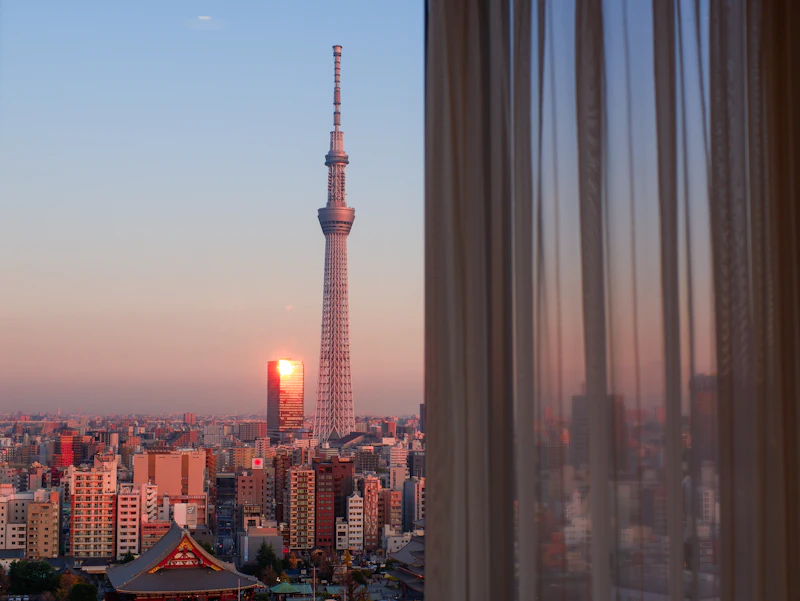
Specialness & Non-daily Experience. The specialness of a Chiyoda-ku hotel lounge comes less from a facility's luxury than from the meaning of its location. Imperial Palace greenery visible through the window; the ministry district a few minutes' walk away — these facts alone produce the experience of being, right now, next to the center of Japan's national functions. For international visitors, that specialness lands in a single sentence: the Imperial Palace is just outside.
Story & Empathy for Background. A hotel lounge here sits on ground with a continuous political history — a castle built in 1457, a shogunal seat from 1590, an imperial palace since 1868. That's a story that belongs to the location itself rather than to any hotel as an institution, and it runs deeper than the commercial histories anchoring Chuo-ku or the international histories anchoring Minato-ku.
Revisit & Continuity Value. Marunouchi and Otemachi draw business travelers on assignment more than daily commuters, and a habit like "meet at that Chiyoda-ku hotel lounge whenever I'm in Tokyo" tends to take hold. Regular status here shows up as a recurring return tied to a work context, repeated across trips rather than built from daily attachment to one seat.
Record & Share Experience. A view that pairs Imperial Palace greenery with the towers of Otemachi carries a visual originality unavailable anywhere else in Tokyo. Posting "from a hotel lounge near the Imperial Palace" carries the ward's historical and symbolic weight along with it, giving the record itself a built-in significance that a generic city view doesn't offer.
Inbound & Multilingual Compatibility. Chiyoda-ku carries international recognition as the center of Tokyo's capital functions. Marunouchi and Otemachi host a dense concentration of foreign firms' Japan offices, and hotels here tend toward comparatively strong multilingual service and English menus. Place names like "Imperial Palace," "Marunouchi," and "Chiyoda" also appear reliably in any research a traveler does before visiting Japan, giving the ward unusually high inbound name recognition. Third Place Japan's inbound evaluation checks not just language support but whether international visitors can use a space without running into a cultural barrier.
How Do Chiyoda-ku's Hotel Lounges Differ by Neighborhood?
The functional character of each neighborhood shapes what staying in a Chiyoda-ku hotel lounge actually means.
Marunouchi sits directly against the Imperial Palace, layered onto the historical planned commercial district Mitsubishi built in the Meiji era. This is the neighborhood where the ward's "double structure of prestige" — a hub of working business and a capital's symbolic weight — is most fully experienced, and it forms the core of Chiyoda-ku's hotel lounge scene.
A more detailed look at Marunouchi's hotel lounges is available in Third Place Japan's Japanese-language guide to Marunouchi — an English version is planned.
Otemachi (area guide planned) concentrates one of Japan's largest clusters of corporate headquarters. As neutral ground adjacent to the site of economic decision-making, hotel lounges here tend to function as a fixed point between business obligations — corporate context front and center, even next door to Marunouchi.
Kojimachi and Hirakawacho (area guide planned) sit close to the National Diet Building and the Prime Minister's Office — the political center of the country. A quieter, more explicitly political third place forms here, adjacent to where policy actually gets made.
What Should You Look for in a Good Hotel Lounge in Chiyoda-ku?
Matching your purpose to the right neighborhood is the starting point for using Chiyoda-ku's hotel lounges as a third place.
Decide whether you need a meeting space or a place to stay. Otemachi and Marunouchi's hotel lounges tend to be optimized for business — strong on quiet, private-feeling seating, and power access. Lounges built around a palace view lean toward functioning as a special-occasion stay instead. Deciding your purpose first is the real starting point.
Watch how the room's function shifts by time of day. Breakfast service for guests in the morning, business lunches or afternoon tea midday, a bar lounge from evening — the same hotel's space changes character through the day, and in Chiyoda-ku, the gap between "daytime business lounge" and "evening bar" tends to be unusually pronounced.
Confirm the terms of outside access in advance. Chiyoda-ku's higher-tier hotel lounges sometimes limit access to guests only, or open through a restaurant reservation, or run on membership. A quick check beforehand keeps your visit matched to your purpose.
Evaluate the view and location before booking. Whether the Imperial Palace's greenery is visible, whether Otemachi's towers fill the skyline — these location details shape the experience substantially. Checking a hotel's official site or a map before reserving is worth the extra step here.
Chiyoda-ku's Third Axis of Prestige
Sorted by the type of prestige on offer, Tokyo's hotel lounges fall into distinct categories, and Chiyoda-ku occupies ground none of the others touch. Shibuya-ku runs on urban trend and a view; Minato-ku on international capital and corporate polish; Chuo-ku on centuries of merchant commerce — a city built by trade rather than governance. All three, however different, share prestige accumulated through private commerce and the market's judgment.
Chiyoda-ku's prestige works on an entirely different logic. With the Imperial Palace, the ministry district, and the National Diet Building at its geographic core, this ward's prestige comes from state will — a symbolism deliberately constructed for a capital to function as one, not a verdict the market handed down. Where Chuo-ku's Nihonbashi carries the weight of centuries as a commercial hub, Chiyoda-ku carries the weight of proximity to the machinery of the nation itself.
What Chiyoda-ku's Hotel Lounges Offer International Visitors
For international visitors, a Chiyoda-ku hotel lounge naturally overlaps with the route that follows an Imperial Palace visit.
"Imperial Palace" is a landmark that appears in nearly every English-language guide to Japan, carrying strong name recognition among travelers. Time spent in a hotel lounge within walking distance functions as a place to quietly sit with the afterglow of that visit — walk the Imperial Palace East Gardens, then settle into a lounge chair nearby, and sightseeing connects naturally into a third-place experience. Otemachi and Marunouchi's hotels tend toward comparatively well-developed English service and multilingual staff, and for business travelers visiting Chiyoda-ku as Tokyo's political and business center, these lounges function readily as neutral ground after a meeting.
Frequently Asked Questions
Q. How do Chiyoda-ku's hotel lounges differ from Chuo-ku or Minato-ku's?
Chuo-ku carries prestige built by centuries of merchant history; Minato-ku's core is international capital and corporate polish. Chiyoda-ku's core is a capital's symbolic prestige, built from proximity to the Imperial Palace and the ministry district — a fundamentally different origin than the market-driven prestige of other wards.
Q. Are Chiyoda-ku's hotel lounges suited to business use?
Yes. With one of Japan's largest concentrations of corporate headquarters in Otemachi and Marunouchi, and the central ministries close by in Kasumigaseki, these lounges function readily as spaces for confidential business conversation, and many hotels here carry space designs built to match that demand for privacy.
Q. Where can I find a hotel lounge with an Imperial Palace view?
Hotels in Marunouchi sit directly against the Imperial Palace East Gardens, offering views over the palace's greenery and moat — one of the most distinctive values a Chiyoda-ku hotel lounge can offer.
Q. Are Chiyoda-ku's hotel lounges good for international visitors?
Higher-tier hotels in Otemachi and Marunouchi tend toward comparatively strong English service and multilingual staff. Sitting near the Imperial Palace, a globally recognized landmark, also gives the ward a locational advantage that makes it an easy destination to choose.
Q. How should I use a Chiyoda-ku hotel lounge across different times of day?
Mornings fill with guest breakfast service, so late morning — roughly 10 a.m. to noon — tends to be calmer for a business lounge. Afternoon tea and meetings pick up from midday, and the room shifts into a bar lounge by evening.
In Summary
A Chiyoda-ku hotel lounge derives its value from a location adjacent to the Imperial Palace and the ministry district — the seat of national function. Not the merchant prestige of Ginza, not the international polish of Minato-ku, but a third axis of prestige built by deliberate capital-planning since the Meiji era: that's the core of what this ward offers. The sense of being, right now, next to the center of Japan's national functions belongs to Chiyoda-ku alone. Third Place Japan evaluates spaces like these across seven axes, and continues documenting each of Chiyoda-ku's neighborhoods as a distinct third place in its own right.
Related reading: Chiyoda-ku as a Third Place: One Ward, Three Kinds of Room covers the same ward's café culture — a duality of prestige and subculture that runs through Marunouchi, Akihabara, and Jimbocho. For a contrasting take on prestige built by centuries of commerce rather than state planning, see Chuo-ku as a Third Place: Staying at the Geographic Center of Tokyo.