Chuo-ku as a Third Place: Staying at the Geographic Center of Tokyo
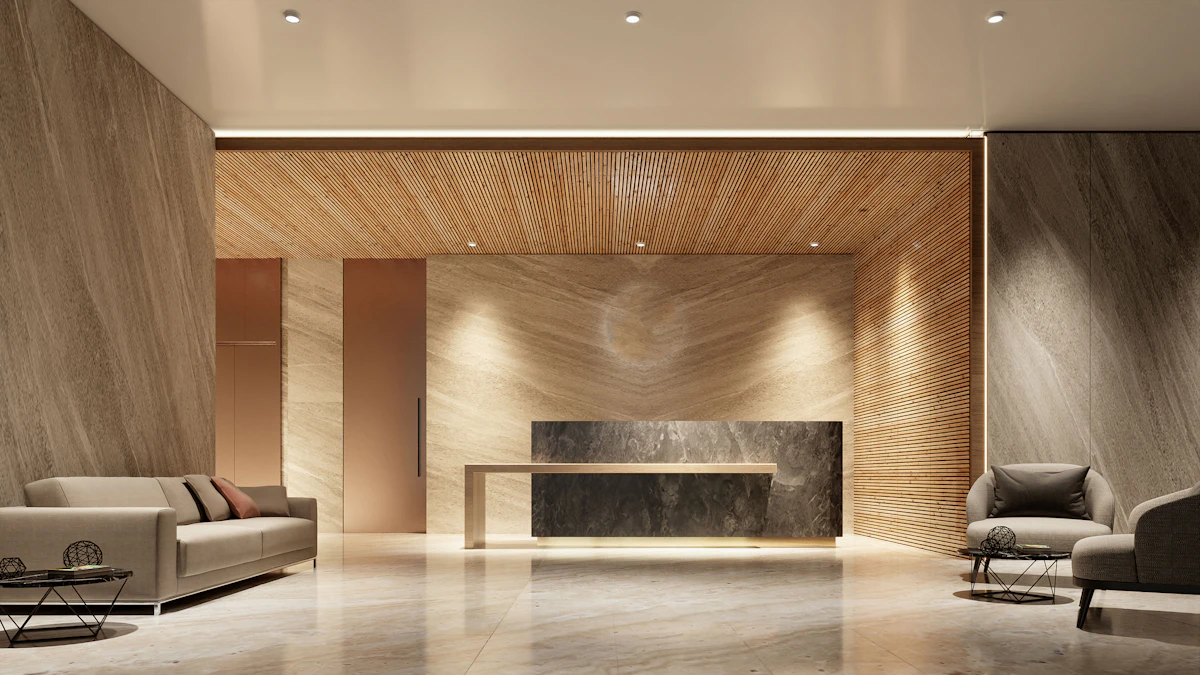
Chuo-ku's hotel lounges sit where Japan's road network begins and the Imperial Palace is a two-kilometer walk away — a sense of place unmatched elsewhere in Tokyo, read through TPJ's seven axes.
Sit down in a Chuo-ku hotel lounge, and the meaning of the place stacks up in layers. Nihonbashi was established as the starting point of Japan's five great highways in 1603. The Imperial Palace sits roughly two kilometers away in a straight line; Tokyo Bay, about three. Those numbers aren't trivia — they describe a ward that sits, quite literally, at Tokyo's geographic and historical center. No hotel lounge in Shibuya-ku or Minato-ku can substitute for that particular sense of place.
Why Chuo-ku's Hotel Lounges Carry a Different Kind of Weight
Chuo-ku's position on the map is unusual by any measure of Tokyo's urban structure.
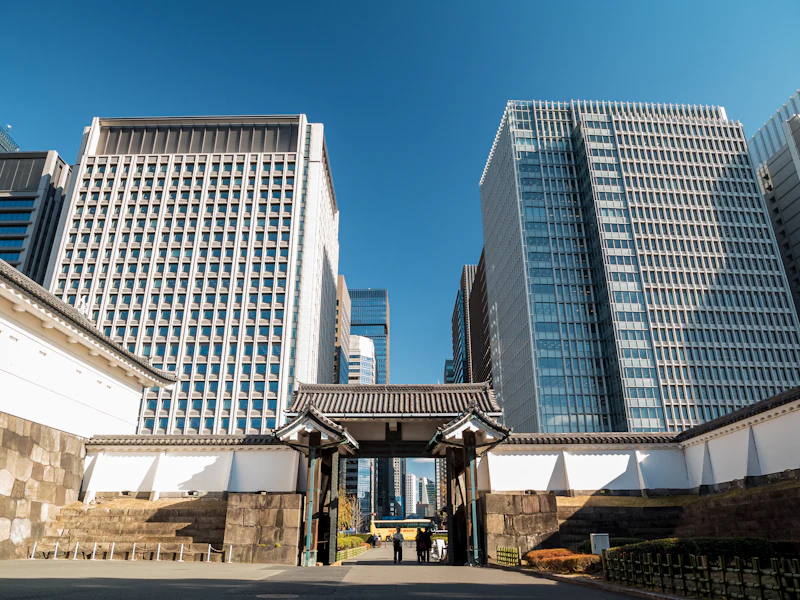
During the Edo period, Nihonbashi served as the reference point for measuring distance across the entire country — every stated distance to Edo was calculated from this one bridge. That function persisted into the modern era: National Routes 1, 2, 4, 6, and 15 are all still designated as originating at Nihonbashi, meaning this single point in Chuo-ku functions as the literal origin of Japan's road network. At the same time, Chuo-ku sits close to Tokyo Bay, laced with the Sumida, Nihonbashi, and Kamejima rivers — waterways that once carried the bulk of the area's commercial traffic and today give hotels in the ward a distinctly urban waterside view. Hamarikyu Gardens, originally built as a shogunal garden and now a Tokyo metropolitan park, remains visible from parts of Tsukiji and Shiodome as urban waterside green space.
Where a Shibuya-ku hotel sells hillside height and a view, and a Minato-ku hotel sells international business polish, Chuo-ku's hotels carry something else entirely: historical density inside a flat commercial district. That difference in kind, not just in quality, is what changes the meaning of a stay.
How Hotel Lounges Function as a Third Place in Chuo-ku
A hotel lounge works as a third place through what Ray Oldenburg called neutrality — belonging neither to the closed membership of a private club nor to the daily routine of a neighborhood café, a lounge functions as neutral ground for people who are simply there today.
What sets Chuo-ku's hotel lounges apart is the specific meaning that neutral ground carries by sitting at Tokyo's geographic and historical center. "I worked in the center of Tokyo today" or "I walked here from Nihonbashi" becomes part of the texture of sitting on that sofa. Few categories in Tokyo carry this particular weight of place as consistently as a Chuo-ku hotel lounge does.
Chuo-ku is also home to Nihonbashi, where a concentration of foreign firms' Tokyo offices sits close to Nagatacho, Kasumigaseki, and Marunouchi. A hotel lounge functioning as neutral ground between business obligations connects naturally to that geography — business travelers, international executives, and political and financial figures converging in the same room gives Chuo-ku's hotel lounges a spatial density distinct from anywhere else in the city.
Reading Chuo-ku's Hotel Lounges Through TPJ's Seven Axes
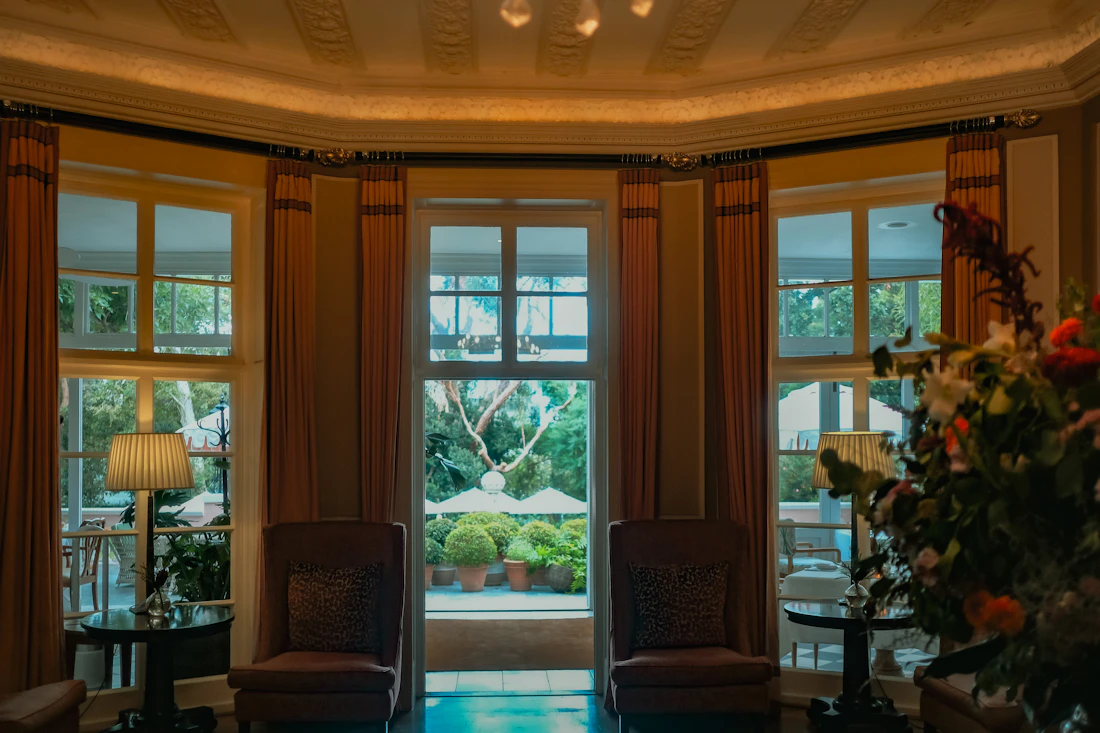
Comfort & Sensory Quality. Chuo-ku's hotel lounges often reflect an accumulated Japanese commercial aesthetic in their material choices. Traditional materials — wood, stone, lacquer — combined with contemporary architectural refinement produce a comfort specific to hotels where centuries of merchant culture and the modern urban hotel overlap. Marble, natural wood, and carefully engineered lighting are chosen to match that context rather than for novelty's sake.
Quietness & Privacy. The quiet in a Chuo-ku hotel lounge doesn't come from restricted entry — it comes from an unspoken agreement among people passing through not to intrude on each other. Business travelers, inbound tourists stopping in, and local meeting attendees all occupy the room as people "just here today," and that shared status keeps the room quiet, almost paradoxically, despite the high foot traffic of a commercial ward.
Specialness & Non-daily Experience. What makes a Chuo-ku hotel lounge feel special is the overlap between historical weight and modern urban convenience. "I spent time at a hotel near Nihonbashi" isn't just a record of comfort — it carries the meaning of having been at the origin point of Japan's roads. For international visitors, that layering of history and contemporary convenience produces a non-daily quality distinct from a stay in Shibuya or Minato.
Story & Empathy for Background. The historical fact of Nihonbashi as the origin point of the nation's roads gives a lounge stay here a story unlike anywhere else. Sitting in the present at a spot where goods and people once converged from across the country adds a depth that comes from the place itself, not from the hotel as an institution. On this axis, Chuo-ku's hotel lounges carry the story of a location rather than the story of a building.
Revisit & Continuity Value. A hotel lounge's revisit value comes from the memory it leaves behind. Once "staying near Nihonbashi on a Tokyo trip" becomes a habit, the lounge starts functioning as a fixed point inside a traveler's movement through the city — not permanent belonging, but a routine of returning to the same spot on each visit to Tokyo.
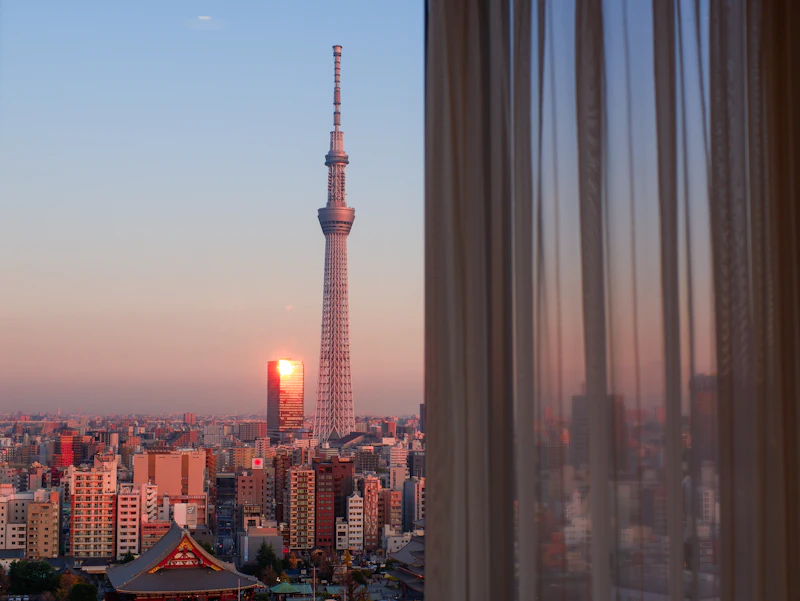
Record & Share Experience. Posting "from a Nihonbashi hotel lounge" carries the ward's historical context along with it. Sitting at the literal geographic origin point of Tokyo gives a post its own built-in significance. The view from many of these lounges — the Sumida River's waterside, historic streetscape layered against modern towers — holds a visual originality worth documenting.
Inbound & Multilingual Compatibility. A hotel lounge is one of the most naturally accessible third places for an international visitor. The hotel itself is an internationally legible format that requires no language to navigate. Chuo-ku's hotel lounges add something specific on top of that baseline: the growing international recognition of "Nihonbashi" as a historically significant place name, and the experience of having stayed at the literal starting point of Japan's road network. English-language service tends to be comparatively well established at hotels in the Ginza and Nihonbashi areas.
How Do Chuo-ku's Hotel Lounges Differ by Neighborhood?
The context of a stay in Chuo-ku shifts by neighborhood.
Ginza pairs 150 years of commercial history with a lounge function built for the passing traveler — a neutral ground for a single encounter. This area works equally well as a vantage point on the ward, a de facto third workspace, and an inbound entry point.
A more detailed look at Ginza's hotel lounges is available in Third Place Japan's Japanese-language guide to Ginza — an English version is planned.
Nihonbashi (area guide planned) layers the historical fact of being the origin point of the national road network onto the present-day reality of a business hub packed with foreign firms' Tokyo offices. The specific meaning of "being at the historical origin point of Japanese business culture" adds a dimension found nowhere else in the ward.
Tsukiji and the area near Hamarikyu (area guide planned) sit close to Hamarikyu Gardens and Tokyo Bay, offering a different kind of hotel lounge experience built on urban waterside calm and a view. Feeling waterside stillness while still inside the city center gives this pocket of Chuo-ku a distinct standing.
What Should You Look for in a Good Hotel Lounge in Chuo-ku?
Matching context to purpose is the fastest way into Chuo-ku's hotel lounge scene.
Match the neighborhood to your purpose. Ginza carries a strong tourism and entertaining context; Nihonbashi carries a strong business-hub context; Tsukiji and the Hamarikyu area suit anyone whose purpose is waterside calm. Deciding which version of "being in the center of Tokyo" you actually want is the starting point.
Check the terms of outside access. Some hotel lounges are reserved for guests only, others require an afternoon-tea reservation, and others open as a bar lounge to walk-ins. Confirming this in advance keeps your visit matched to your purpose.
Watch how the room's function shifts through the day. The same lounge often serves breakfast for guests in the morning, afternoon tea at midday, and a bar lounge from evening onward. Matching your own purpose to the time of day shapes how satisfying the visit turns out to be.
Weigh its fitness as a "third workspace." Chuo-ku's business geography makes "where do I spend time between meetings" a real question here. Power outlets, Wi-Fi, and a moderate level of ambient noise matter, and in this ward, it's worth factoring in that the meaning of the place itself tends to bleed into the meaning of the work.
Chuo-ku's Place in Tokyo's Hotel Landscape
Seen across the city, hotel lounge culture varies sharply by ward. Shibuya-ku's lounges tend to center on urban height and a sense of trend; Minato-ku's on international business polish. Where those wards build the hotel experience around a contemporary expression of lifestyle, Chuo-ku holds its position through the sheer weight of staying at Tokyo's geographic and historical center. Ask "where in Tokyo am I right now," and Chuo-ku is the ward that answers most directly: the center.
What Chuo-ku's Hotel Lounges Offer International Visitors
For international visitors, a Chuo-ku hotel lounge offers a firsthand experience of staying where Japan's history and its present overlap.
"Nihonbashi" carries a growing recognition among visitors to Japan as a place name with roots in the Edo-period road system. Time spent in a hotel here, and in its lounge, adds a dimension to a trip — the sense of having touched the origin point of a city — that a stay in Shibuya or Minato doesn't offer in quite the same way. Multilingual staff, English menus, and transit guidance tend to be comparatively well developed at Chuo-ku's higher-tier hotels.
Frequently Asked Questions
Q. How do Chuo-ku's hotel lounges differ from Shibuya-ku or Minato-ku's?
Shibuya-ku's hotels lean on view and trend, and Minato-ku's on international polish. Chuo-ku's core is the weight of staying at Tokyo's geographic and historical center, layering the historical fact of Nihonbashi as the road network's origin point onto a present-day business hub. Which context you want out of a Tokyo stay determines which ward fits.
Q. Can I use a Chuo-ku hotel lounge for business?
Chuo-ku holds Nihonbashi, home to many foreign firms' Tokyo offices, close to Nagatacho, Kasumigaseki, and Marunouchi. As neutral ground near the center of Tokyo's business geography, a hotel lounge here functions naturally for meetings, gaps between appointments, and a touch of formal polish.
Q. Are Chuo-ku's hotel lounges well suited to international visitors?
Hotels in the Nihonbashi and Ginza areas tend to have comparatively strong multilingual staff and English-language service. Staying at what's recognized as Tokyo's historical center adds a dimension to a trip that a stay in Shibuya or Minato doesn't replicate.
Q. What's the difference between Ginza and Nihonbashi's hotel lounges?
Ginza's core is 150 years of commercial history and a lounge built for the passing traveler, strong on entertaining, sightseeing, and a vantage point on the ward. Nihonbashi's core is the historical fact of being the road network's origin point layered onto a present-day business hub — a different meaning of stay within the same ward.
Q. Is there a Chuo-ku hotel lounge with a waterside view?
Hotels near Tsukiji and Hamarikyu sit close to Tokyo Bay and Hamarikyu Gardens, offering waterside calm and a view distinct from Ginza or Nihonbashi. It's a different register of Chuo-ku's hotel lounge experience — urban stillness by the water, inside the city center.
In Summary
A stay in a Chuo-ku hotel lounge carries weight because the meaning of the place, not just the quality of the room, shapes the value of the experience. Nihonbashi's historical fact as the road network's origin point, the coexistence of water and city, the range running from Ginza through Nihonbashi to Tsukiji — all of it produces something that stands apart from a hotel anywhere else in Tokyo. Not Shibuya's view, not Minato's international polish, but the sense of being at the center of Tokyo — that's the most essential reason to choose a Chuo-ku hotel lounge as a third place. Third Place Japan evaluates spaces like these across seven axes, and continues documenting each of Chuo-ku's neighborhoods as a distinct third place in its own right.
Related reading: Chuo-ku as a Third Place: The Merchant City That Built Japan's Bar Tradition and Chuo-ku as a Third Place: Three Layers of Time on One Table cover the same ward's other third-place layers, both built on the same historical continuity.