Bunkyo-ku as a Third Place: Intellectual Solitude on Tokyo's Scholar-Town Slopes
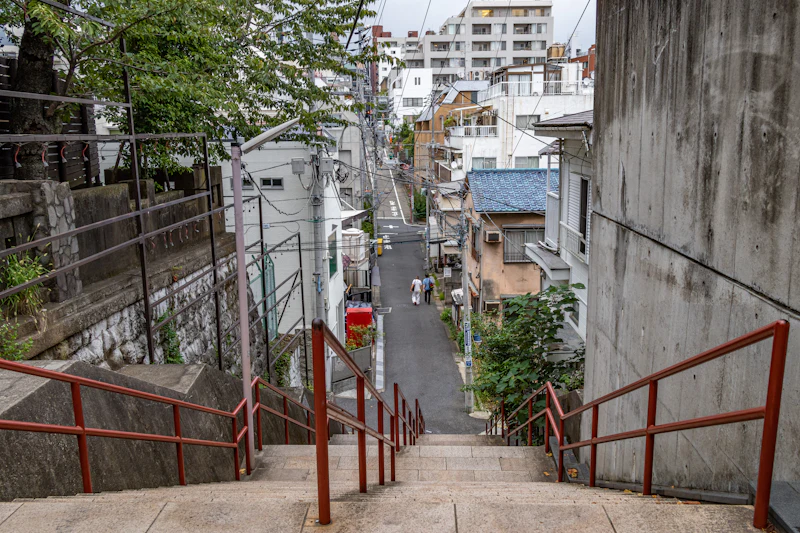
Bunkyo-ku offers a retreat built on scholarship, not faith or nature — Hongo's university slopes, two formal daimyo gardens, and a writers' quarter, read through TPJ's seven axes.
Bunkyo-ku builds retreat out of scholarship rather than faith or nature. Around the University of Tokyo's Hongo campus, a grid of named slopes climbs a plateau that once belonged to a feudal lord, while two gardens holding Japan's highest landscape designation sit within the same small ward. For anyone seeking solitude for the sake of thinking rather than praying or unplugging, Bunkyo-ku offers a version of retreat that few other parts of Tokyo can.
Why Retreat in Bunkyo-ku Looks Different
Ask someone in Tokyo where to find retreat, and they'll usually point to a temple town or a patch of green space at the city's edge. Bunkyo-ku takes a third route.
Formed in 1947 from the merger of the former Hongo and Koishikawa wards, Bunkyo-ku takes its name directly from its character: the characters mean "capital of letters." Since the Meiji era, universities have layered themselves onto this plateau, and the ward — one of Tokyo's smaller 23 wards by area, home to roughly 250,000 people — holds a university town of slopes, Edo-period daimyo gardens, and the streets where Meiji- and Taisho-era writers once lived, all within walking distance.
In Third Place Japan's seven-axis evaluation, Bunkyo-ku's retreat and zen experience stands out on Quietness & Privacy and Story & Empathy for Background, though for reasons distinct from any other ward. This isn't the stillness of a shrine or the silence of a forest — it's the particular quiet that comes from being physically adjacent to serious study. That's the retreat unique to Bunkyo-ku.
Bunkyo-ku's Three Layers of Quiet
Retreat here forms across three areas, each shaped by a different piece of history.
Hongo — A Scholar Town on a Plateau
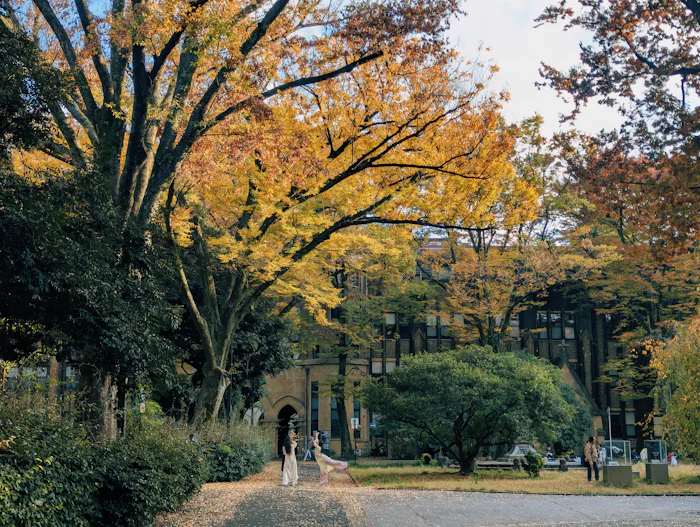
Hongo is the plateau at Bunkyo-ku's center, and the University of Tokyo's Hongo campus occupies a wide stretch of it. This land belonged to the Maeda clan of Kaga domain during the Edo period, and the Akamon gate near the main entrance — originally built as a ceremonial gate for a shogunal daughter marrying into the Maeda family — still stands as physical evidence of that earlier life.
Hongo's slopes aren't just changes in elevation — they define the character of the entire neighborhood. Slopes with names like Kikuzaka, Aburazaka, and Tondanzaka cut into the edge of the plateau, and the quality of the silence changes with every step up. A well associated with the Meiji-era writer Higuchi Ichiyo still sits in a Kikuzaka side street, a quiet trace of literary Tokyo tucked into an ordinary lane. Where Yanaka's alleys hold the sound of daily life pressed up against silence, Hongo's slopes hold something closer to the quiet of concentration — walking here resembles thinking more than it resembles wandering.
Koishikawa — Silence Kept by Daimyo Gardens
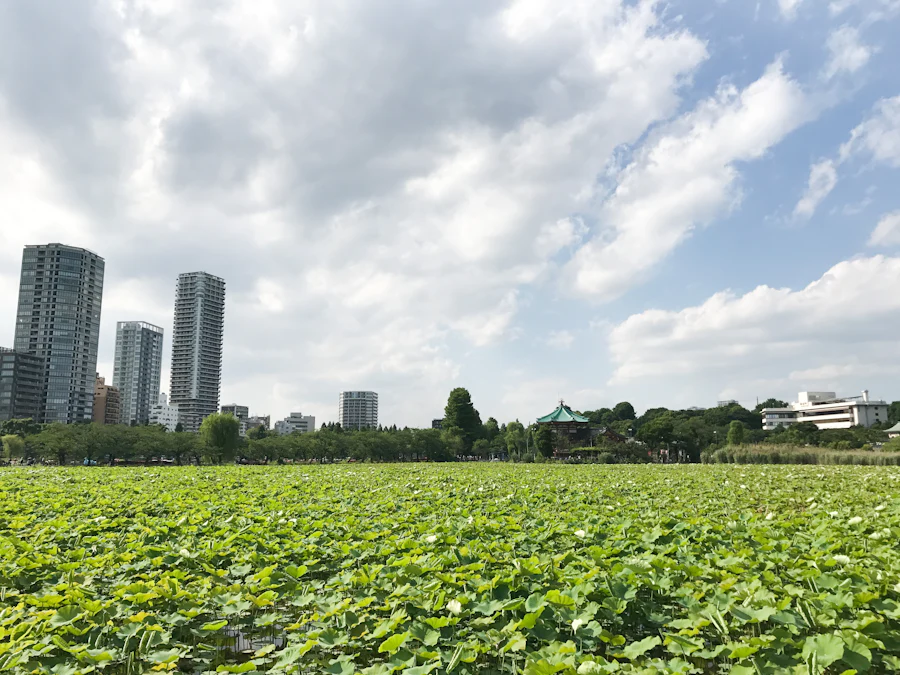
At the center of the Koishikawa area sits a strolling garden begun in 1629 within the grounds of the Mito Tokugawa family's residence, completed under the domain's second lord, Tokugawa Mitsukuni. It holds the rare distinction of being designated both a Special Historic Site and a Special Place of Scenic Beauty by the national government — one of only a handful of gardens in Japan to carry both. Its circuit design, built around a central pond, turns walking without a fixed destination into the point of the experience.
Just outside the garden, a postwar tree-lined promenade — laid out during redevelopment after the war — has become known for its cherry blossoms. An Edo-period daimyo garden and a postwar green corridor sit side by side here, and that layering is what gives Koishikawa its particular depth.
A short distance away, in the Hongo-Komagome area, a second strolling garden built by Yanagisawa Yoshiyasu carries the same Special Place of Scenic Beauty designation. Having two daimyo gardens of this formal rank inside one ward is a condition unique to Bunkyo-ku among Tokyo's 23 wards.
Nezu and Sendagi — A Writers' Residential Quarter
Nezu and Sendagi form a low-rise residential quarter that Meiji- and Taisho-era writers favored as a place to live. In Sendagi, the site of novelist Mori Ogai's former residence, Kanchoro, is preserved as a memorial hall, and nearby Yabushita-dori is known as a slope both Ogai and Natsume Soseki are said to have walked. The rental house where Soseki wrote "I Am a Cat" once stood in this same neighborhood.
Though within walking distance of Taito-ku's Yanaka, Nezu and Sendagi carry the quiet of a residential quarter rather than a temple town. Walking its stone steps and wooden fences is itself a way of retracing the daily walks these writers once took as a matter of routine.
What Makes This a Third Place: Solitude Adjacent to Study
Bunkyo-ku's retreat function answers sociologist Ray Oldenburg's condition of "neutral ground" in a distinctive way.
A university, by its nature, gives a neighborhood an open plateau that anyone can walk through regardless of status or occupation. Hongo's tree-lined streets and gardens extend the same open passage to a visitor as to a student or researcher. Much of this space allows long, unhurried stays with no commercial obligation attached — a condition that underwrites the ward's retreat function as much as any single site does.
The second mechanism is a paradox: resting by way of learning. The same concentration that belongs to a library and the ease that belongs to a garden stroll are available within a few minutes' walk of each other on this one plateau. That's a form of urban intellectual rest that a suburban nature retreat simply doesn't offer.
Reading Bunkyo-ku's Retreat Experience Through TPJ's Seven Axes
Comfort & Sensory Quality. The timber of the Akamon gate, the stonework of the gardens, the worn stone steps of the slopes — each carries the texture that only time produces. This isn't manufactured calm; it's a comfort built on materials that have aged in place.
Quietness & Privacy. Bunkyo-ku's quiet tracks closely with elevation. Foot traffic thins and the view opens up with every step up the plateau. The deepest stillness tends to arrive right after a garden's morning opening, or on the slopes before the university's first lectures begin.
Specialness & Non-daily Experience. Few other wards hold multiple gardens carrying the national government's Special Historic Site and Special Place of Scenic Beauty designations. What makes this non-daily isn't staging — it's the ability to walk into a genuine early-Edo daimyo garden without a reservation or any special ceremony.
Story & Empathy for Background. A Kaga-domain estate became a university; a Mito Tokugawa garden survived to earn a national designation; writers walked these slopes home from work. Bunkyo-ku's retreat deepens the moment you understand these layers of history stacked like sediment. It's a story of scholarship and letters, distinct from the faith-centered narratives found elsewhere in the city.
Revisit & Continuity Value. The gardens change face with every season, and the slopes take on different shadows as the light shifts through the year. Because this is a university town, the rhythm of the academic calendar changes the flow of people on the streets themselves — no two visits to Bunkyo-ku look quite the same.
Record & Share Experience. The tiled roof of the Akamon gate, maple leaves reflected in a garden pond, the skyline of the plateau seen partway up a slope — Bunkyo-ku's subject matter carries the weight of real history rather than a staged photo opportunity. This is a ward suited to quiet composition, not spectacle.
Inbound & Multilingual Compatibility. Multilingual signage has begun appearing in parts of the gardens, but the slopes and the writers' quarter still carry little language support. Still, walking a slope or circling a garden requires no language at all, which keeps the experience open to visitors regardless of what they speak.
How to Find the Right Conditions for Retreat in Bunkyo-ku
In Bunkyo-ku, timing and route matter more than any single destination.
Early mornings. Before the university's first lectures, generally ahead of 8 a.m., and right after a garden's opening, Hongo's slopes and gardens show their quietest face. Foot traffic is thin, and little more than footsteps on stone break the silence.
Weekdays. Weekends bring more visitors to both the gardens and the slopes. A weekday morning during the academic term, in particular, is closest to the ward's true rhythm as a working university town.
Walk the elevation, not just the flat streets. In Hongo, climbing from the base of the plateau up toward Hongo-dori, or in Koishikawa, moving from the garden's low ground toward the surrounding high ground — tracking the change in elevation reveals layers of quiet a flat walk misses entirely.
Follow a garden's intended route. Bunkyo-ku's daimyo gardens were designed with a specific circuit in mind, and following the marked path around the pond is what the design rewards. Taking the time to complete the full circuit is the basic discipline of a garden retreat here.
The Historical Design Behind Bunkyo-ku's Quiet
Bunkyo-ku's identity as a scholar town isn't incidental — it's the direct product of Meiji-era education policy. Edo-period daimyo estates were converted one after another into land for schools, and the wide grounds the Kaga domain once held on the Hongo plateau became one of Japan's foremost centers of learning.
Koishikawa Korakuen is a living remnant of early-Edo garden culture. That a garden built within the private estate of one of the Tokugawa family's three main branches survived the dissolution of the domains and has been maintained ever since speaks to the historical continuity running through this particular patch of ground.
The residential quarter of Nezu and Sendagi carries a similar layering: generations of writers connected to the university chose to live on this plateau, walking down its slopes into the city below as part of daily life. That physical rhythm — living up on the high ground, descending to work — helped build the particular sense of distance this neighborhood still carries.
Each May, the university opens its Hongo campus to the public for its annual festival, and the grounds — quiet the rest of the year — fill briefly with crowds. That contrast is itself instructive: Bunkyo-ku runs on an "open quiet" as its baseline, with a different face reserved for a handful of days each year.
Frequently Asked Questions
Q. What's the best time of day for a retreat experience in Bunkyo-ku?
Before 8 a.m., ahead of the university's first lectures, and right after a garden's opening are when Bunkyo-ku is at its quietest. Weekday mornings during the academic term tend to reveal the ward's true rhythm more than weekends do.
Q. How is a Bunkyo-ku retreat different from Taito-ku's Yanaka?
Yanaka's quiet is rooted in a temple town — stillness woven into everyday life. Bunkyo-ku's quiet comes from its university and daimyo gardens — a solitude adjacent to scholarship rather than faith. The two wards sit next to each other geographically, but the source of their stillness is entirely different. Taito-ku's own retreat and zen guide covers that Yanaka-centered version of Tokyo quiet in full.
Q. Can Bunkyo-ku's gardens and slopes be covered in a single day?
Yes. Both Koishikawa Korakuen and Rikugien sit centrally enough to cover in half a day, and pairing either with a walk through Hongo's slopes makes for a full day that crosses all three of the ward's distinct layers of quiet.
Q. Who is a slope walk in Bunkyo-ku suited for?
It suits anyone who wants to think alone, or who wants to move between reading and walking without losing the thread of concentration. The rhythm of climbing and descending creates natural pauses that a flat walk doesn't offer, which makes it easier to organize your thoughts along the way.
Q. Do you need a reservation for retreat in Bunkyo-ku?
Aside from paid entry to the gardens, no reservation is needed anywhere in the ward. The slopes and the old residential quarter are open to walk at any time, and that casualness — the ability to visit on a whim — is part of what makes Bunkyo-ku's retreat experience distinct.
In Summary
Bunkyo-ku shows that retreat doesn't require a temple or a mountain — it can be built from a university plateau, two formally designated daimyo gardens, and the quiet residential streets where writers once lived. Third Place Japan evaluates spaces like these across seven axes, and Bunkyo-ku's retreat and zen experience stands as a clear case of intellectual solitude functioning as a genuine third place inside the city.
Related reading: Bunkyo-ku as a Third Place: Shrines and Temples Behind Tokyo's Scholar-Town Faith covers the ward's other defining layer — a religious life built around the pursuit of academic success. For a wider look at silence as a third place elsewhere in the city, see Meiji Jingu as a Third Place: Finding Silence in Central Tokyo.