Bunkyo-ku as a Third Place: Shrines and Temples Behind Tokyo's Scholar-Town Faith
Bunkyo-ku's shrines and temples center on a single devotion — academic success. Yushima Tenmangu, the Confucian Yushima Seido, and Nezu Shrine, read through TPJ's seven axes.
Bunkyo-ku's shrines and temples converge on a single devotion more than those of any other part of Tokyo: academic success. A shrine dedicated to the god of learning, a former Confucian academy, a shrine ranked among Tokyo's ten great shrines — all of it sits on the same plateau where students have prayed for exam results for generations, and still do.
Why Do Bunkyo-ku's Shrines and Temples Center on Scholarship?
Most neighborhood shrines and temples hold space for a wide range of prayers — business success, good relationships, family safety. Bunkyo-ku is narrower. Its faith gravitates toward one outcome: passing the exam.
This isn't coincidence. The shogunate placed an official academy on this plateau, and after the Meiji era, the University of Tokyo and a wave of other institutions took root on the same ground, so faith and scholarship grew up side by side. A shrine where votive plaques carrying exam wishes accumulate year-round, a hall once revered by shogunate scholars, a temple linked by blood to a shogun's mother — understanding Bunkyo-ku's religious life means understanding this shared "field of learning" running underneath all of it.
In Third Place Japan's seven-axis evaluation, Bunkyo-ku's shrine and temple experience scores particularly high on Specialness & Non-daily Experience and Story & Empathy for Background. Where Taito-ku's faith is woven into daily routine, Bunkyo-ku's is a prayer visited with a purpose in mind.
A Map of Faith in Bunkyo-ku: Three Sacred Grounds of Learning
Bunkyo-ku's shrines and temples divide into three areas, each with its own character.
Yushima — The God of Learning and a Confucian Academy
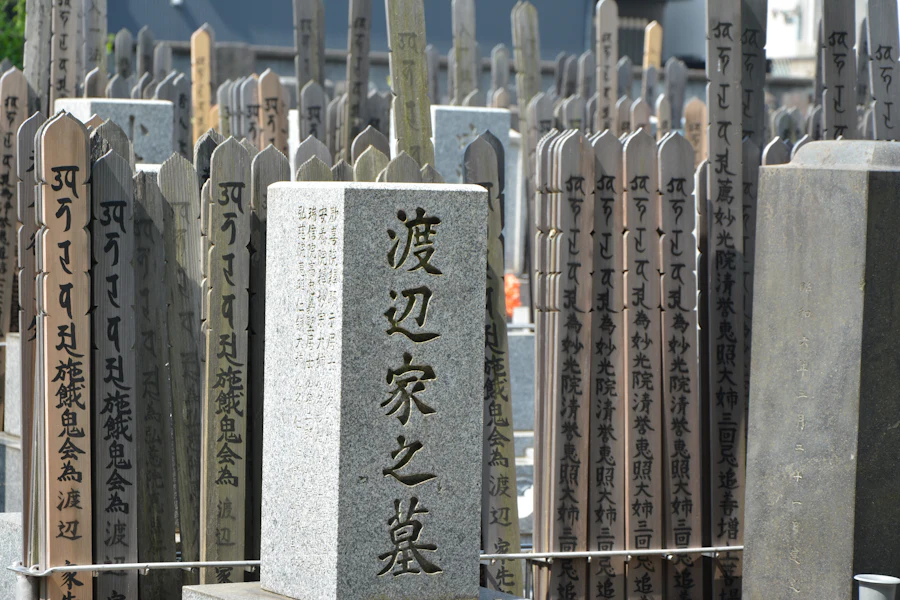
Yushima Tenmangu traces its founding to the year 458, and later came to enshrine Sugawara no Michizane, the scholar-official who was posthumously deified as the god of learning. During exam season, its grounds fill with votive plaques carrying exam wishes, and the shrine is equally known for its plum blossom festival each February and March.
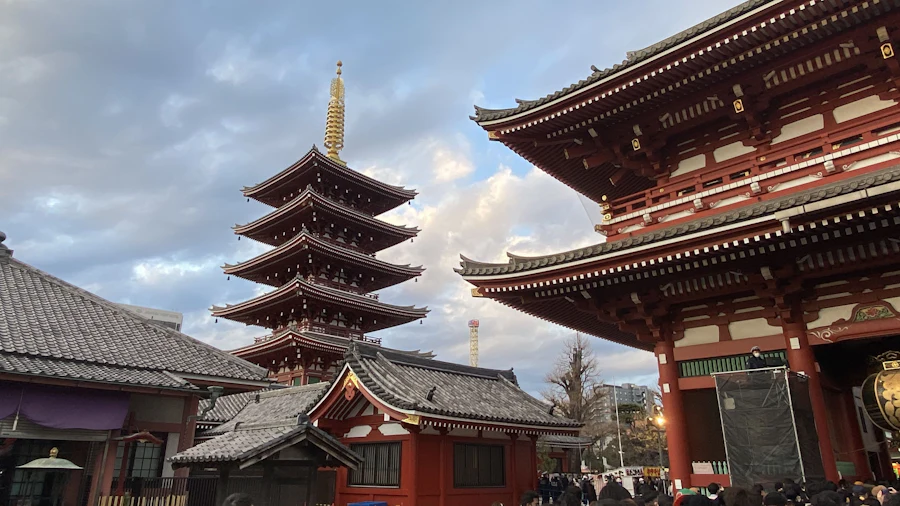
A short walk from Yushima Tenmangu stands a hall for the veneration of Confucius, built in 1690 by the shogun Tokugawa Tsunayoshi. This site once served as the shogunate's official academy, where retainers and scholars from domains across the country studied Confucian classics, and it's counted among the lineage of institutions that eventually led to the founding of the University of Tokyo. A Shinto shrine for exam prayers and a former Confucian academy standing within walking distance of each other is a condition found nowhere else in Japan.
Nezu — A High-Ranking Shrine Under Shogunal Protection
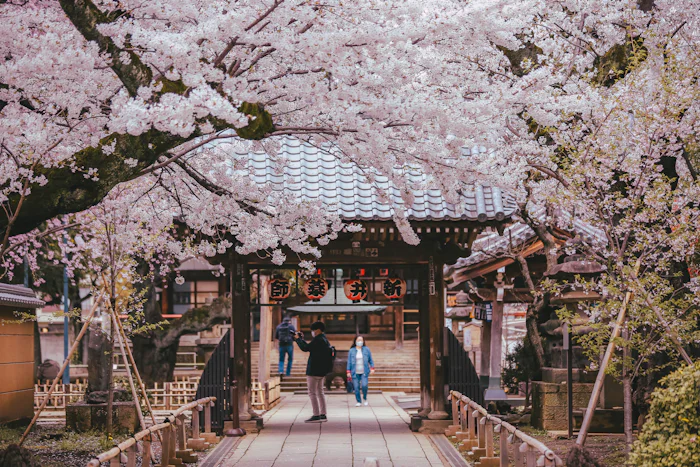
Nezu Shrine ranks among Tokyo's ten great shrines. Its current buildings date to 1706, commissioned by Tokugawa Tsunayoshi in gratitude to the local tutelary deity he had venerated during his years as lord of Kofu domain, and the gongen-zukuri architecture is designated an Important Cultural Property of Japan.
Each April and May, roughly 3,000 azalea bushes across around 100 varieties bloom across a section of the grounds during the shrine's azalea festival, a burst of color entirely unlike the shrine's usual quiet. For residents of the surrounding Nezu and Sendagi neighborhoods, Nezu Shrine functions as both a place of daily worship and a site of shogunal-era prestige — a rare combination.
Koishikawa — A Shogun's Mother and a Shrine of Hydrangeas
Koishikawa holds a temple traditionally linked to Odai no Kata, the mother of Tokugawa Ieyasu. Its devotion centers not on the shogun himself but on the woman who gave birth to him — a slightly different angle from most other temples connected to the Tokugawa family.
The same Koishikawa-Hakusan area holds another of Tokyo's ten great shrines, known for its hydrangea festival each June, when the approach to the shrine turns blue and purple with the season's blooms and draws a different rhythm of visitors than the rest of the year.
How Faith Functions as a Third Place in Bunkyo-ku
Bunkyo-ku's shrines and temples embody, in a very specific way, the Oldenburg principle that a third place welcomes people of any background around a shared purpose.
Students facing entrance exams, graduate students stuck on their research, working adults studying for a professional license — people of every age and station stand side by side in the same courtyard, united by the same wish to pass. That's a different structure from a prayer for business fortune or a good match, where each visitor's circumstances are entirely their own; the shared goal here produces a sense of solidarity.
The other mechanism is that of a temporary shelter while waiting on a result. For someone living inside the uncertainty of an exam outcome, the few minutes spent with hands pressed together in a shrine courtyard function as a brief step outside everyday anxiety.
Reading Bunkyo-ku's Shrine and Temple Experience Through TPJ's Seven Axes
Comfort & Sensory Quality. The old plum trees of Yushima Tenmangu, the gongen-zukuri hall at Nezu Shrine, the settled grounds of the Koishikawa temple — each holds the texture of an Edo-period space that has aged in place. It's timber and stone weathered by time, not showy ornamentation, that gives these grounds their comfort.
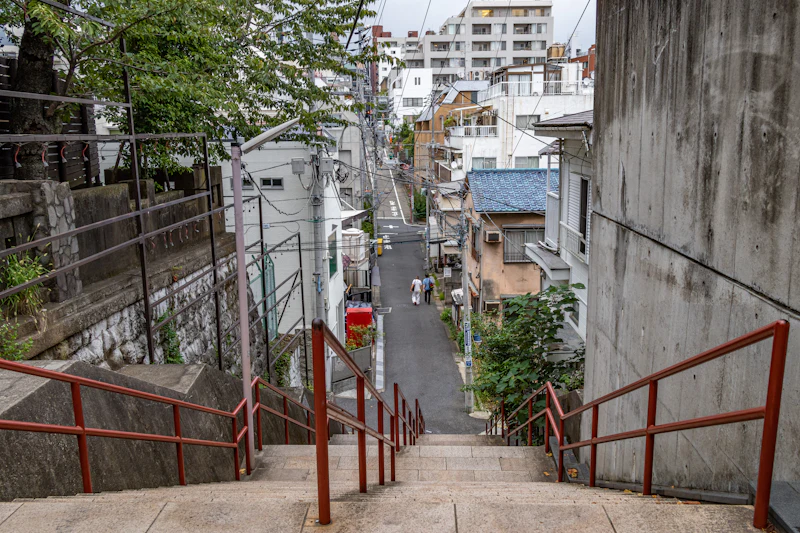
Quietness & Privacy. Yushima Tenmangu during exam season and Nezu Shrine during its azalea festival tend to draw crowds. The Koishikawa temple and the hydrangea shrine nearby, by contrast, tend to stay relatively calm year-round. Choosing when to visit based on purpose is the key to finding quiet here.
Specialness & Non-daily Experience. Yushima Tenmangu, visited with a clear goal in mind; Nezu Shrine, with its gongen-zukuri hall built by shogunal commission; the Koishikawa temple, with its lineage tracing to a shogun's mother — Bunkyo-ku's non-daily quality comes from both formal rank and a visitor's sense of purpose.
Story & Empathy for Background. Yushima's hall carries the lineage of Confucian scholarship; Nezu Shrine carries a personal connection to a shogun; the Koishikawa temple carries devotion to the woman who gave birth to a shogun. Where Taito-ku's faith is the lived history of ordinary residents, Bunkyo-ku's is the history of power and scholarship itself.
Revisit & Continuity Value. Exam challenges tend to span multiple years for many people. Someone returns to report a pass; someone else returns to pray again before the next attempt. Bunkyo-ku's scholarship-centered faith builds an ongoing relationship with visitors that rarely concludes in a single visit.
Record & Share Experience. Votive plaques packed edge to edge at Yushima Tenmangu, a carpet of azaleas at Nezu Shrine's spring festival, a hydrangea-lined approach in June — Bunkyo-ku's shrines and temples offer distinct subject matter whenever season and purpose align.
Inbound & Multilingual Compatibility. A devotion to the god of learning tends to strike international visitors as a fresh discovery. Multilingual signage varies by site, but the act of writing a wish on a votive plaque requires no particular language at all.
How Do You Read Bunkyo-ku's Sacred Grounds of Learning?
Matching your purpose and your timing changes the quality of a visit to Bunkyo-ku's shrines and temples.
Visiting as a student. Praying with some room to spare before the exam itself, rather than at the last minute, tends to make for a calmer visit. Yushima Tenmangu grows more crowded the closer it gets to peak exam season.
Tracing the history. Walking from Yushima Tenmangu to the nearby Confucian hall lets you experience two distinct traditions of scholarly devotion — Shinto and Confucian — in a single route unique to this ward.
Timing around the seasons. The azalea festival at Nezu Shrine (April–May), the hydrangea festival near Hakusan (June), and the plum festival at Yushima Tenmangu (February–March) are the moments when Bunkyo-ku's shrines and temples show their most expressive side.
Reading the architecture. Looking closely at details like Nezu Shrine's gongen-zukuri hall or the temple layout at the Koishikawa site turns a visit into something deeper than sightseeing.
The Historical Design Behind Bunkyo-ku's Faith
The scholarship-centered character of Bunkyo-ku's shrines and temples traces back to Edo-period education policy. The academy Tokugawa Tsunayoshi established became the shogunate's official school, gathering talented retainers from domains across Japan to study Confucian classics, and it briefly functioned as a university before becoming part of the lineage that led to the founding of the University of Tokyo.
Nezu Shrine's prestige is likewise tied to personal devotion at the top of the political order. Tsunayoshi prayed there for an heir during his years as a young lord of Kofu domain, and the current hall was built in gratitude once that wish was granted — a history that sets Nezu Shrine apart from an ordinary neighborhood tutelary shrine.
Odai no Kata, who rests at the Koishikawa temple, was the mother of Tokugawa Ieyasu — devotion here centers not on the shogun himself but on the woman who bore him, a distinct thread among the ward's Tokugawa-linked sites.
Once the University of Tokyo took root on this same ground after the Meiji era, Edo-period scholarly faith and a modern institution of learning overlapped on the same plateau. Bunkyo-ku's shrines and temples still draw prayers for academic success today because that historical continuity is still active.
Frequently Asked Questions
Q. Which shrine in Bunkyo-ku is known for academic success?
Yushima Tenmangu is the ward's best-known shrine for exam prayers, dedicated to the god of learning. The nearby Confucian hall shares that same scholarly lineage and is often visited alongside it. Third Place Japan considers the fact that both sites sit within walking distance of each other a distinctive value unique to Bunkyo-ku.
Q. Why is Nezu Shrine counted among Tokyo's ten great shrines?
Nezu Shrine's current hall dates to 1706, built by Tokugawa Tsunayoshi in gratitude to the tutelary deity he venerated during his years as lord of Kofu domain, and this history places it among Tokyo's ten great shrines. The gongen-zukuri architecture, designated an Important Cultural Property, still carries the character of Edo-period shrine building today.
Q. How is Bunkyo-ku's faith different from Taito-ku's?
Taito-ku's faith is defined by its everyday quality — woven into residents' routines. Bunkyo-ku's faith centers on a clear purpose: praying for academic success. The two wards sit close together geographically, but the character of devotion is entirely different. Taito-ku's own shrine and temple guide covers that daily-life-centered version of faith in full.
Q. When are the azalea and hydrangea festivals?
Nezu Shrine's azalea festival tends to run from April into May, and the hydrangea festival near Hakusan tends to fall in June. Bloom timing shifts from year to year, so it's worth checking current conditions before visiting.
Q. What kind of temple is the Koishikawa site linked to Odai no Kata?
It's a Jodo-shu temple traditionally regarded as the site of her grave. Its devotion centers not on the shogun himself but on the woman who gave birth to him, giving it a distinct standing among the ward's Tokugawa-linked temples.
In Summary
Bunkyo-ku's shrines and temples work as a third place because they share a single devotion running underneath all of them — academic success — inherited from a scholarly plateau where Edo-period academies and a modern university now stand on the same ground. Third Place Japan evaluates spaces like these across seven axes, and Bunkyo-ku's shrine and temple experience is a clear case of faith organized around purpose rather than routine.
Related reading: Bunkyo-ku as a Third Place: Intellectual Solitude on Tokyo's Scholar-Town Slopes covers the ward's other defining layer — a retreat built on scholarship rather than faith or nature. For a wider look at faith and silence as a third place elsewhere in the city, see Meiji Jingu as a Third Place: Finding Silence in Central Tokyo.