Shibuya-ku as a Third Place: Standing Where Japan's Next Trend Is Being Made
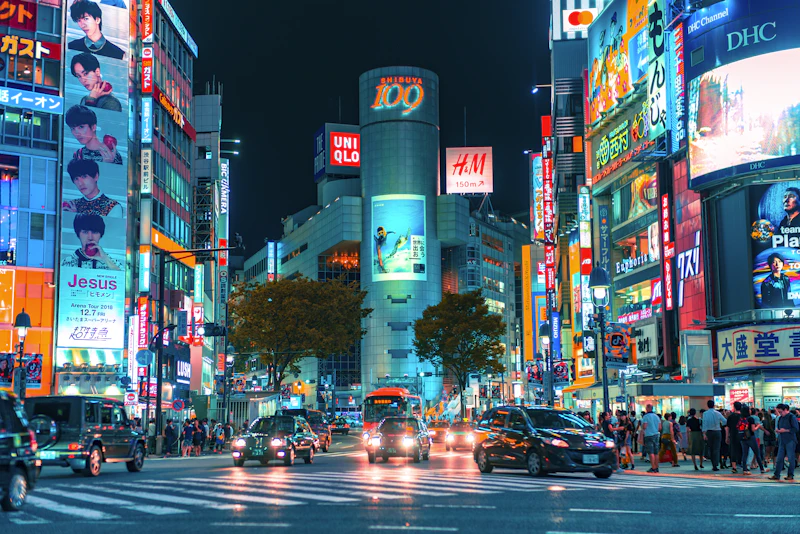
Shibuya-ku is where Japan's youth culture and street fashion are made in real time — visitors witness a trend before the rest of the world catches up.
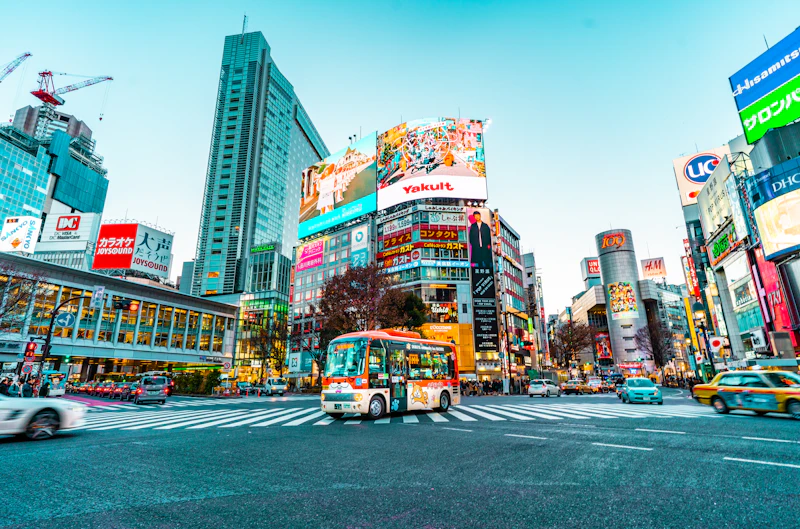
Shibuya-ku is the ward where Japan's youth culture, street fashion, and pop culture are made — not displayed after the fact, but generated in the present tense. Centered on the Shibuya Scramble Crossing and Harajuku's Takeshita-dori, this is where visitors come not to view Japanese history but to stand inside the moment a trend is being made.
Why Shibuya-ku Works on a Different Axis From the Rest of Tokyo
Tokyo offers more than one kind of inbound experience, and it matters which one a traveler is actually looking for.
Taito-ku — Asakusa, Ueno, Yanaka — is where Edo-period culture continues to function as daily life, largely unchanged in spirit for over a century. Shibuya-ku does the opposite. It is the source point of Japan's street fashion and youth culture, a place that renews itself on a timescale of months, not decades. Visitors don't come here to see what Japan was; they come to see what Japan is becoming, often before that trend has traveled anywhere else.
In Third Place Japan's seven-axis evaluation, Shibuya-ku's inbound experience scores highest on Specialness & Non-daily Experience and Record & Share Experience — but by a different route than Taito-ku takes to the same axes. Taito-ku's specialness comes from historical depth; Shibuya-ku's comes from contemporaneity itself, the fact that nothing here is a re-enactment. That single distinction is the core of what Shibuya-ku offers.
The Shape of Shibuya-ku: Four Layers From Crossing to Back Street
Shibuya-ku sits in southwestern central Tokyo, radiating outward from Shibuya Station. Rather than a set of separate historic districts, the ward reads best as a single gradient — from raw street energy to quiet refinement.
Shibuya Station and the Scramble Crossing form the gateway. Famous for moving several hundred pedestrians on a single green light, the crossing is best understood together with the newer observation decks and rooftop spaces built around it, which turn a crossing built for movement into a place built for watching. The vertical shopping and dining towers surrounding the station add a second, upward-facing layer of urban experience that stands in contrast to the low-rise backstreets found elsewhere in the ward.
Harajuku and Takeshita-dori, a short walk from the crossing, carry an entirely different density and clientele. Small independent shops line a narrow street where teenagers and travelers walk shoulder to shoulder. The street has worked as a testing ground for young people's self-expression since the 1970s, and that same structure — young, low-cost, low-commitment experimentation — is still what drives it today.
Omotesando and Cat Street mark the point where the energy generated on Takeshita-dori shifts into refinement. A broad, zelkova-lined avenue and a narrower backstreet that snakes behind it connect street culture to international luxury on the same walk.
Ura-Harajuku and Jingumae, tucked just behind the main streets, draw a quieter crowd — industry insiders and people who already know the culture. Small independent shops sit along alleys with little signage, rewarding visitors who already have some idea of where they're going, and giving this stretch of Shibuya-ku a distinct, unadvertised version of the same non-daily quality found elsewhere in the ward.
What Makes Shibuya-ku a Third Place: Sharing the Present, Not the Past
Shibuya-ku's inbound value isn't ordinary sightseeing — it functions as a third place because it gives visitors something to share with the city in real time.
Just as a worshipper and a traveler share the same temple grounds in Asakusa, a local high school student and a visitor share the same stretch of sidewalk on Takeshita-dori. What differs is the substance of what's being shared. Taito-ku offers inherited continuity; Shibuya-ku offers something being updated as you stand there. That sense of co-presence — being caught up in something still happening — is the core of what makes this ward function as a place to be, not just a place to pass through.
Ray Oldenburg's condition of neutrality applies here as directly as it does to any temple courtyard. The Scramble Crossing and Takeshita-dori's sidewalk require no ticket and no reservation. Anyone can become part of the same crowd, on the same terms, which gives Shibuya-ku's inbound experience an unusual openness for a place this famous.
A second, quieter function is at work too: the chance to become a trend-spotter. A look seen on the street in Harajuku or Ura-Harajuku today has a way of surfacing in another city months later — and few places in Tokyo let a visitor witness that time lag as directly as Shibuya-ku does.
Reading Shibuya-ku's Inbound Experience Through TPJ's Seven Axes
Comfort & Sensory Quality. Takeshita-dori and the Scramble Crossing run dense and high-energy, a different register of comfort from a traditional teahouse. Omotesando's tree-lined avenue and Ura-Harajuku's back alleys, by contrast, carry a calmer, more considered sense of material and space.
Quietness & Privacy. Quiet isn't the point of this ward's inbound experience, and the Scramble Crossing and Takeshita-dori tend to stay busy regardless of time of day. Ura-Harajuku's side streets and an early-morning walk down Omotesando offer a comparatively settled version of the same neighborhood.
Specialness & Non-daily Experience. Standing inside a crossing recognized worldwide, or walking the same street where a fashion trend first took shape — Shibuya-ku's non-daily quality comes from the sense of proximity to something the rest of the world is watching.
Story & Empathy for Background. Harajuku's youth fashion traces back to street culture of the 1970s, and Ura-Harajuku's independent brand scene took shape in the 1990s. Knowing that decades-long lineage changes how the street reads — this is closer to living history than most visitors expect.
Revisit & Continuity Value. Shibuya-ku's streetscape turns over fast. A shop that stood on a given corner last month may be something else entirely by the next visit. Where Taito-ku's reason to return is seasonal — a festival, a bloom — Shibuya-ku's is the renewal cycle of the culture itself.
Record & Share Experience. An aerial view of the crossing, a shopfront in Harajuku's saturated color, a hidden mural down a Ura-Harajuku alley — this is one of the most photographed wards in Tokyo, and much of it is built with an audience already in mind.
Inbound & Multilingual Compatibility. The major facilities around Shibuya Station, Harajuku, and Omotesando offer strong multilingual support. Takeshita-dori's independent shops vary in language ability, but their visual, browse-first retail style tends to lower the language barrier regardless.
Does the Scramble Crossing Actually Work as a Third Place?
A crossing you walk through once and never return to sounds more like a waypoint than a place to be — and that reaction is fair as far as it goes.
What changes it is a shift from crossing to watching. The observation decks and cafés that now overlook the intersection convert a few seconds of movement into minutes of staying, turning transit into a vantage point. Rooftop garden space built above the shopping complexes near the station adds a second kind of pause — somewhere to stand still in an area otherwise defined by motion. Once watching and staying become possible, the crossing stops being pure transit and starts to function as a place in its own right.
A Neighborhood Guide to Shibuya-ku's Inbound Experience
Shibuya Station and the Scramble Crossing — Tokyo's Densest Intersection
Feel the crowd firsthand, then take in the same view from above at one of the observation decks nearby. Movement and observation both work here, which is what gives this starting point its third-place quality. Area-specific coverage is planned.
Harajuku and Takeshita-dori — Where Street Fashion Gets Tested
Walk the street where Japanese youth fashion is tried out first. The narrow lane runs dense with independent shops, and local teenagers and travelers share the same pace and the same crowd. Area-specific coverage is planned.
Omotesando and Cat Street — From Street Energy to Refinement
The energy generated on Takeshita-dori shifts into something more considered here, where a tree-lined avenue meets international luxury retail. Shibuya-ku's specialty coffee scene in this area is covered in Omotesando as a Third Place for Specialty Coffee, and its private-salon culture in Omotesando as a Third Place for Premium Salons.
Ura-Harajuku and Jingumae — The Alleys Only Insiders Find
Independent shops with minimal signage cluster along quiet alleys here, drawing a crowd that already knows the culture. Coverage of this neighborhood is planned. A short walk away, a forested shrine precinct dating to the Meiji era offers the exact opposite register of experience — see Finding Quiet Solo Time at Meiji Jingu for how close that contrast really is.
For International Visitors
Shibuya-ku ranks among Tokyo's most accessible wards for travelers who don't speak Japanese. Major facilities around the station, Harajuku, and Omotesando offer English signage and staff prepared for international visitors. Takeshita-dori's smaller independent shops vary in language support, but their browse-first, visually driven retail style tends to make the language barrier less of an obstacle than it is elsewhere.
Frequently Asked Questions
Q. How is Shibuya-ku's inbound experience different from Taito-ku's?
Taito-ku offers continuity with Edo-period tradition still functioning as daily life. Shibuya-ku offers the opposite: contact with Japan's youth culture and pop culture as it's generated in real time. Choose Taito-ku to experience history; choose Shibuya-ku to experience what's happening now.
Q. What makes the Shibuya Scramble Crossing worth visiting for inbound travelers?
The sight of hundreds of pedestrians crossing on a single signal is a genuinely rare urban spectacle. Shifting from crossing it to watching it from one of the observation decks or cafés nearby turns a few seconds of transit into a place to actually stay.
Q. When is the best time to visit Harajuku and Takeshita-dori?
The crowd and its makeup shift by time of day. Weekday mornings tend to be calmer, and weekend afternoons draw noticeably larger crowds. Choosing a time that matches your goal — people-watching versus browsing without the crowd — makes a real difference.
Q. Are there quiet spots in Shibuya-ku?
Takeshita-dori and the Scramble Crossing stay busy most of the day, but Ura-Harajuku's alleys and an early-morning walk down Omotesando offer a comparatively calm version of the same ward. The forested precinct of Meiji Jingu is also within walking distance, a genuine contrast to the crowds nearby.
Q. Is there a language barrier in Shibuya-ku?
Not much of one. Major facilities around Shibuya Station, Harajuku, and Omotesando offer solid multilingual support. Takeshita-dori's independent shops vary, but their visual, browse-first retail style tends to make language matter less than it would elsewhere.
In Summary
Shibuya-ku's inbound experience runs on the opposite axis from Taito-ku's continuity with the past: this is a ward built around contemporaneity itself, from the Scramble Crossing's raw motion to Harajuku's street trials to Omotesando's refinement to Ura-Harajuku's insider quiet. Third Place Japan evaluates spaces like these across seven axes, and continues to track this ward's fast-moving culture as it evolves.
Related reading: Taito-ku as a Third Place: Where Asakusa, Ueno, and Yanaka Keep Edo Culture Alive covers the opposite end of Tokyo's inbound spectrum, and Tokyo Third Places: A Traveler's Guide to Finding Your Space in Japan explores how this framework applies across the city. For Shibuya-ku's participatory side — sport, park culture, and hands-on leisure — see Shibuya-ku as a Third Place: Where Culture Means Joining In, Not Just Watching.