Meiji Jingu as a Third Place: Finding Silence in Central Tokyo
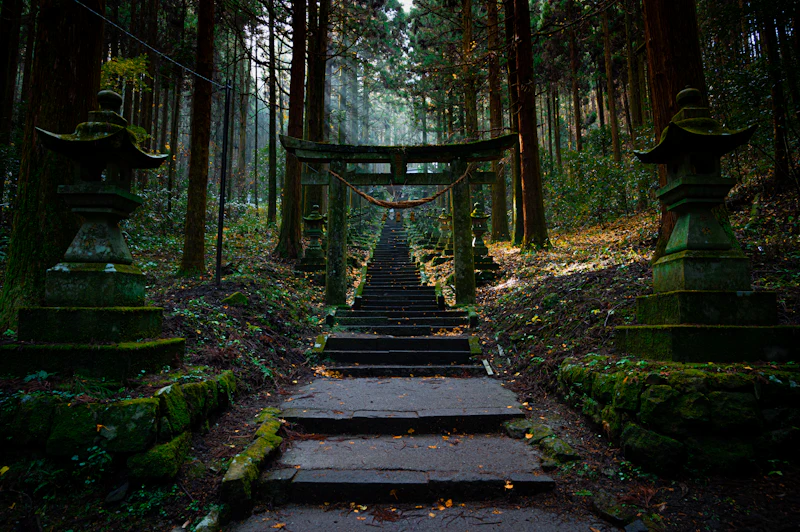
Meiji Jingu is one of the most remarkable third places in Tokyo. One minute from Harajuku Station — in the middle of a city of 14 million — 700,000 square meters of ancient forest create genuine silence. Third Place Japan evaluates Meiji Jingu highly on silence, story, and inbound accessibility: three of the seven axes in its certification framework.
The concept of the "third place" — coined by sociologist Ray Oldenburg — describes spaces beyond home and work where people can simply be themselves. Meiji Jingu fulfills this role in a way few urban spaces anywhere in the world can match.
What Makes Meiji Jingu a Third Place
Oldenburg identified several characteristics of third places: neutral ground, a leveling function, accessibility, regular visitors, a low profile, and a playful mood. Meiji Jingu satisfies most of these.
Neutral ground: The shrine's gravel path welcomes everyone equally — tourists, office workers on a lunch break, couples, solo visitors. No one is asked their business.
Accessibility: Free to enter (the inner garden requires a small entry fee — confirm current rates before visiting). Open from sunrise to sunset. Harajuku Station is one minute away, Meiji-Jingumae Station three minutes. No reservation required.
Leveling function: On the gravel path, the noise of urban status — work titles, social media, the pace of Harajuku — falls away. The forest equalizes.
The specific quality that distinguishes Meiji Jingu from other urban green spaces is the forest itself. This is not a park that happens to have trees. The forest was deliberately designed by ecologists in 1920 to evolve over 100 years into something resembling a natural woodland — and it has. Over 100,000 trees of 365 species, donated from across Japan, now form a canopy that absorbs both sound and light.
The 100-Year Forest: A Story Worth Knowing
When Meiji Jingu was established in 1920, the site was barren. Rather than plant a conventional formal garden, the architects of the shrine invited the leading ecologists of the era to design a self-sustaining forest. The plan called for conifers in the first generation, gradually giving way to broadleaf species over decades. A century later, the forest has evolved largely as predicted — a living monument to ecological foresight.
Knowing this story changes the experience of walking the path. The gravel underfoot, the filtered light, the sound of wind in the canopy — these become evidence of a 100-year project that worked. This is what Third Place Japan evaluates as "Story & Heritage" in its 7-axis framework: the depth added to a place by knowing its background.
How to Visit as a Third Place
Go early. Before 9 a.m. on weekdays, the path is nearly empty. The light is low and directional. The gravel sounds different when fewer people are walking it.
Walk slowly. The southern path from Harajuku Gate to the main hall is about 800 meters. At a normal pace, this takes 10 minutes. At a walking meditation pace — attending to the sound of gravel, the height of the trees, the movement of light — it can take 30.
Stay after the hall. Most visitors complete the main ritual and leave. The northern sections of the grounds — paths toward the inner garden and the Meiji Memorial Hall — are quieter and less visited.
Use the inner garden. The Meiji Jingu Gyoen (inner garden) requires a small entry fee and offers a further layer of quiet: an iris garden, a traditional Japanese structure, and the spring called Kiyomasa-no-Ido that has drawn visitors for centuries.
TPJ 7-Axis Evaluation Summary
| Axis | Score | Notes |
|---|---|---|
| Comfort & Space | High | Forest environment; gravel path |
| Silence & Privacy | Very High | Exceptional urban silence |
| Specialness | High | 100-year forest; Tokyo location |
| Story & Heritage | Very High | Deliberate ecological design |
| Revisit Value | High | Different in each season |
| Record & Share | Moderate | Photography encouraged |
| Inbound Access | Very High | Multilingual signage; free entry |
Access Information
- Address: 1-1 Kamizono-cho, Yoyogi, Shibuya-ku, Tokyo 151-8557
- Nearest stations: Harajuku Station (JR Yamanote Line) — 1 min walk; Meiji-Jingumae Station (Tokyo Metro) — 3 min walk
- Opening hours: Sunrise to sunset (varies by season)
- Admission: Free (inner garden: small entry fee — confirm current rates before visiting)
- Official site: meijijingu.or.jp
FAQ
Q. Is Meiji Jingu worth visiting as a solo traveler?
Absolutely. The shrine is particularly suited to solo visits. The gravel path encourages a meditative pace, and the forest environment is most fully experienced without the social obligations of group travel. Early weekday mornings offer the deepest quiet.
Q. How long should I plan to spend at Meiji Jingu?
A minimum of 45 minutes allows you to walk the southern path and visit the main hall. Two hours is comfortable if you include the inner garden and take time to sit. The forest rewards unhurried attention.
Q. Is Meiji Jingu appropriate for non-Japanese visitors unfamiliar with Shinto?
Yes. The shrine provides multilingual signage and the main ritual (two bows, two claps, one bow) is briefly explained at the hall. No religious background is required — the space welcomes all visitors regardless of faith.
Q. What is Third Place Japan's certification, and how does Meiji Jingu fit?
Third Place Japan evaluates spaces across seven axes: comfort, silence, specialness, story, revisit value, record experience, and inbound accessibility. Meiji Jingu scores exceptionally on silence, story, and inbound axes — making it a natural reference point for understanding what a third place can be in Japan. See TPJ certified venues for spaces that meet the full certification standard.