Taito-ku as a Third Place: Where Asakusa, Ueno, and Yanaka Keep Edo Culture Alive
Taito-ku is where Edo-era culture still functions as daily life, not a museum exhibit — the most culturally dense ward in Tokyo for inbound travelers.
Taito-ku is where Edo-era Japan still functions as daily life rather than as a museum exhibit. Home to Asakusa, Ueno, and Yanaka, this is the one Tokyo ward where traditional culture, working shrines and temples, and ordinary neighborhood life share the same streets. For travelers looking for something beyond Tokyo's modern surface, Taito-ku is usually where the search ends.
Why Taito-ku Feels Different From the Rest of Tokyo
Tokyo offers several distinct kinds of visitor experience, and it helps to know which one you're choosing.
Shibuya and Harajuku put you inside contemporary Japanese pop culture — fashion, youth trends, constant reinvention. Minato-ku, especially Roppongi and Azabudai, delivers international city life and luxury consumption. Chuo-ku's Ginza shows the pinnacle of Japan's merchant commercial culture. All three are, in their own way, showcases of modern Tokyo.
Taito-ku operates on a different axis entirely. Bringing together Asakusa, Yanaka, and Ueno, this ward is where the daily culture inherited from the Edo period is still actively in use — not preserved behind glass, but functioning. Traditional crafts, shrines and temples, old shopping streets, variety theaters, and long-running family businesses aren't museum displays here; they are part of how the neighborhood runs today.
In Third Place Japan's seven-axis evaluation, Taito-ku's inbound experience scores highest on Specialness & Non-daily Experience and Story & Empathy for Background. If what you're looking for is what Japan actually feels like away from its modern surface, Taito-ku answers that question more directly than any other Tokyo ward.
The Shape of Taito-ku: Four Neighborhoods, One Compact Ward
Taito-ku sits in northeastern Tokyo, with the Sumida River forming its eastern edge. It's the second-smallest of Tokyo's 23 wards by area, which means cultural facilities, religious sites, shopping streets, and residential blocks all sit unusually close together.
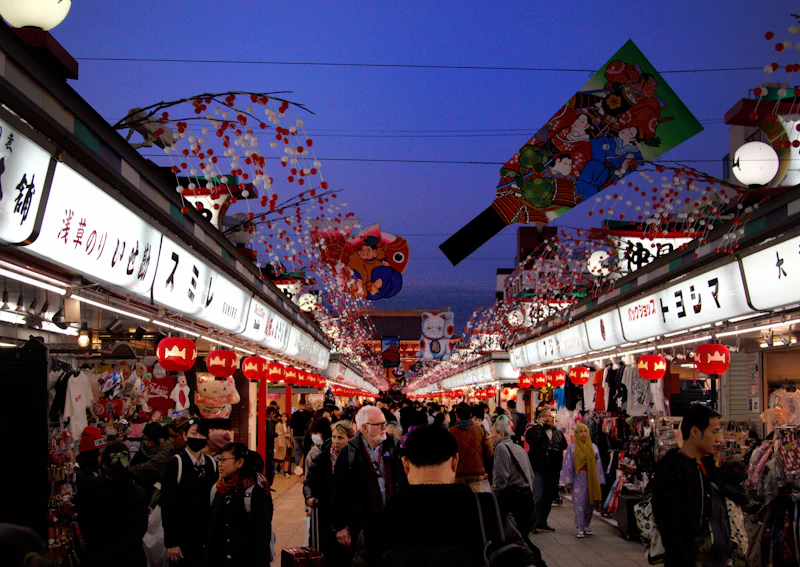
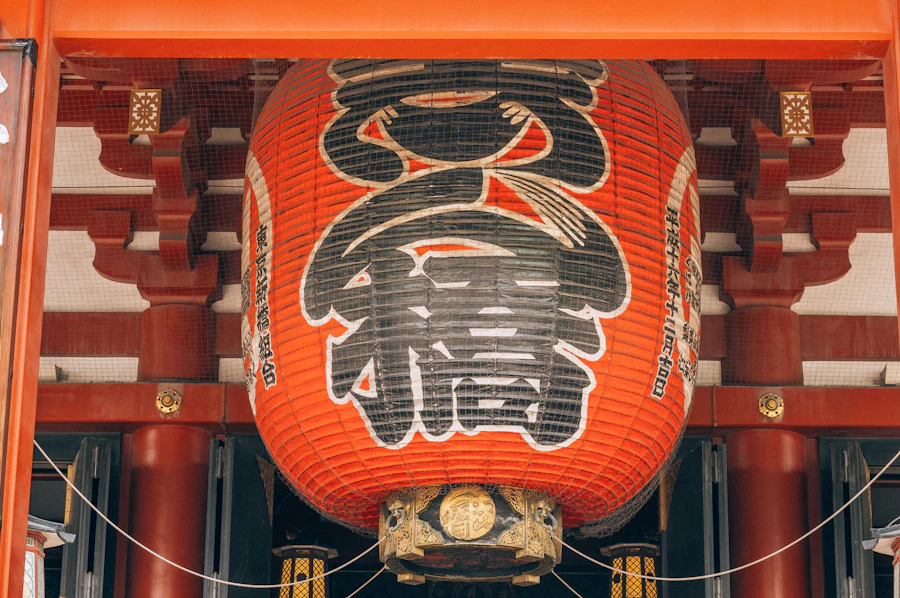
Asakusa spreads along the Sumida River and functions as the gateway to Taito-ku's inbound experience. Kaminarimon Gate, Nakamise shopping street, Sensoji Temple, rickshaw rides, and kimono rental all sit within walking distance of each other, compressing an Edo-period atmosphere into roughly a 500-meter radius. The Tokyo Metro Ginza Line, Toei Asakusa Line, and Tobu Skytree Line all converge here, and both Narita and Haneda airports connect directly.
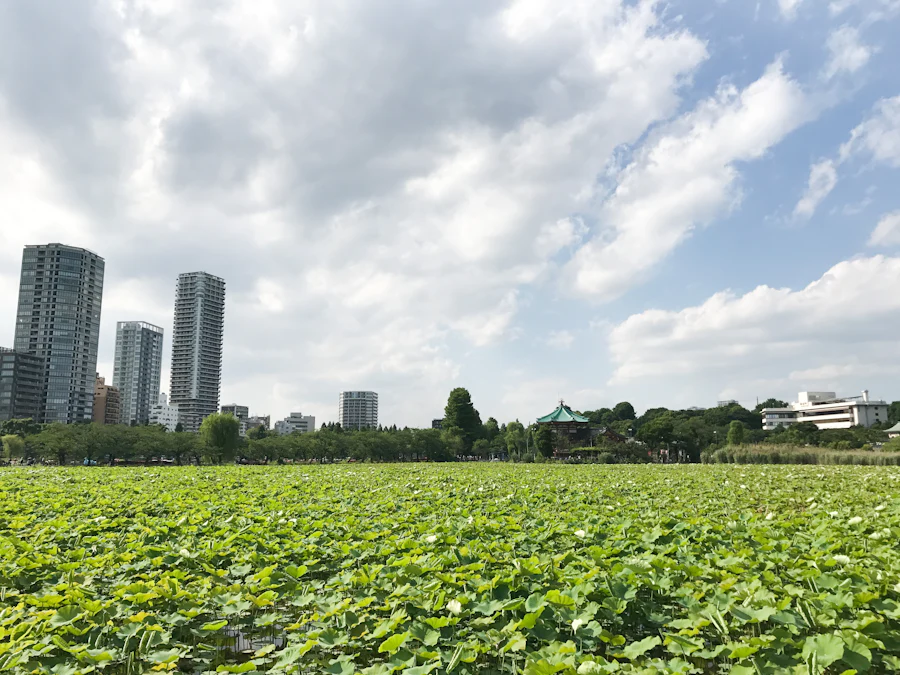
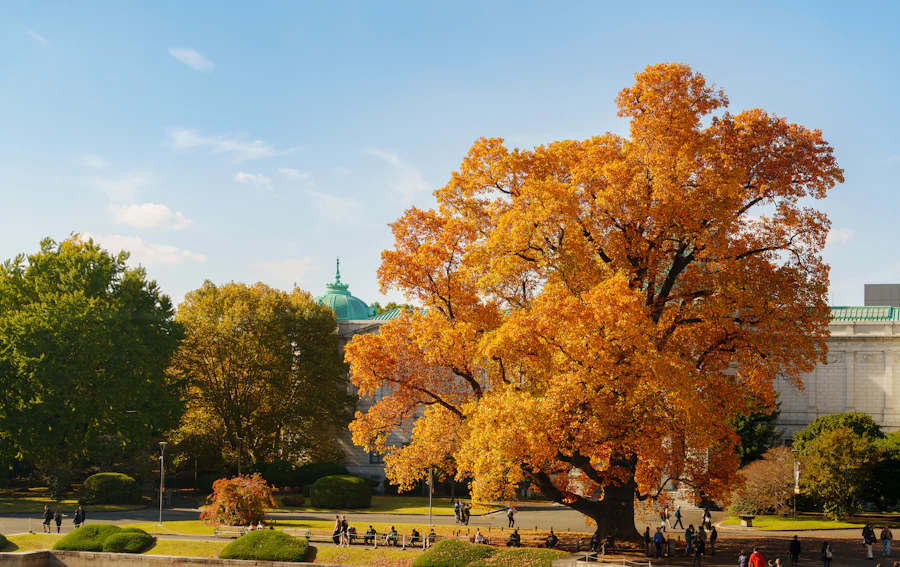
Ueno sits at the edge of a plateau, where a cluster of world-class cultural institutions shares a single park. The Tokyo National Museum, the National Museum of Western Art, the National Museum of Nature and Science, and Ueno Zoo are all within walking distance of one another — a complex built on the Meiji-era idea that knowledge should be opened to the public. The JR Yamanote and Keihin-Tohoku lines cross here along with several subway lines, making Ueno the transport hub for the whole ward.
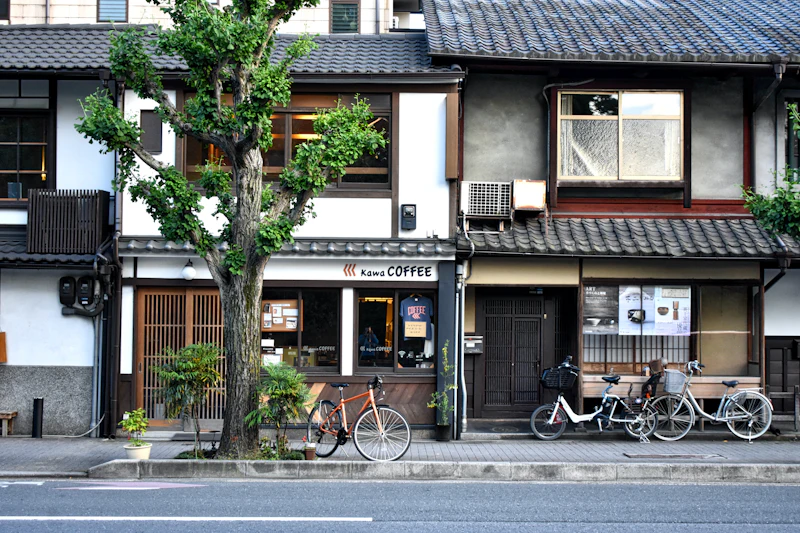
Yanaka, part of the district known as Yanesen, is a temple town in the ward's northwest. More than 30 temples cluster here, and the historic density of the district turns simply walking its backstreets into a cultural experience in itself. Yanaka has stayed relatively untouched by mass tourism, and because everyday local life continues alongside it, it offers something specific: the non-daily inside the daily, in the middle of Tokyo.
Kuramae, along the southern stretch of the river, has become a center for contemporary craft and design. The area once held Edo-period rice warehouses; today, design studios and craft workshops occupy the same ground. It's a newer draw for visitors interested in where tradition and contemporary making overlap.
What Makes Taito-ku a Third Place: Living Culture, Not a Performance
The core of what Taito-ku offers inbound travelers is contact with living culture — not a re-enactment staged for visitors.
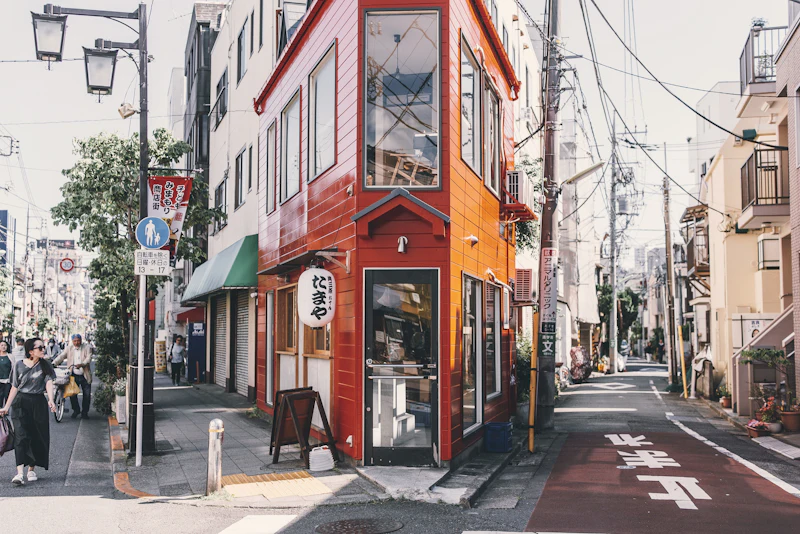
Walk through Nakamise in a rented kimono, and the people beside you are local worshippers visiting the temple for their own reasons. Walk Yanaka's backstreets, and the person walking toward you is a resident on the way home from shopping. Sit by the pond in Ueno Park after the museums, and the person eating lunch on the next bench may well work nearby.
What sets Taito-ku apart from other tourist areas in Tokyo is this structure of coexistence — visitors and residents sharing the same space at the same time. This isn't a theme-park version of Japan built for display. It's the ordinary operation of the neighborhood, with travelers folded into it, and that coexistence is the core of Taito-ku's function as a third place for inbound visitors.
The conditions Ray Oldenburg identified for a third place — neutral ground open to anyone, a base of regulars, and easy access — are dense here. Temple grounds, park plazas, old shopping streets: these are all places you can simply be, at no cost and with no requirement to perform as a tourist.
Reading Taito-ku Through TPJ's Seven Axes
Comfort & Sensory Quality. The outdoor spaces carry unusual sensory weight — Nakamise's stone paving, Yanaka's narrow lanes, Ueno Park's tree cover. On a clear day, simply standing outside is most of the experience, and texture matters here: worn stone, timber, moss.
Quietness & Privacy. This varies sharply by area and time of day. Asakusa's main approach tends to draw crowds, but Sensoji's grounds in the early morning, Yanaka on a weekday morning, and Ueno's museums right after a rainy-day opening carry a stillness that's unusual for a Tokyo tourist destination.
Specialness & Non-daily Experience. Kimono rental, rickshaw rides, and craft workshops in Asakusa; artifacts spanning from the Jomon period to the present in Ueno; a district of more than 30 temples in Yanaka — this is a concentration of non-daily experience that no other Tokyo ward can substitute.
Story & Empathy for Background. Every part of Taito-ku carries historical weight: Asakusa as an Edo-era entertainment district, Ueno as a product of Meiji cultural planning, Yanaka's temple cluster dating to the early Edo period. Knowing the background changes how the space registers. Taito-ku functions, in effect, as an open-air museum with a story attached to every block.
Revisit & Continuity Value. Taito-ku shows a different face depending on the season, the time of day, and the route taken. The Sanja Festival in May, Sumida River fireworks in July, an early Yanaka morning, cherry blossoms in Ueno — the experience keeps renewing itself, which is what gives people a reason to come back.
Record & Share Experience. Asakusa's lantern-lit approach at dusk, kimono photos against Nakamise's old shopfronts, Yanaka's cat-lined backstreets, Ueno Park under cherry blossoms — the ward offers more genuinely photogenic backdrops than most single Tokyo neighborhoods, without needing to stage anything for the camera.
Inbound & Multilingual Compatibility. Asakusa and Ueno's major sites are multilingual to a standard that ranks among the best in Tokyo. Yanaka and Kuramae are more limited in this regard — but that limitation is itself evidence of a district that hasn't been built around tourism, which preserves the authenticity of the experience.
A Neighborhood Guide to Taito-ku's Inbound Experience
Asakusa — The Compressed Edo Experience
Kaminarimon Gate, Nakamise, Sensoji Temple, kimono rental, rickshaws, variety theaters, and craft experiences all sit within a 500-meter radius. To use Asakusa as a place to stay rather than a place to simply consume, the key shift is moving from the front street — Nakamise — to the back streets: Denboin-dori and Oku-Asakusa, the quieter district just behind the main approach.
Ueno — A Day Spent Inside a Park
The Tokyo National Museum, the National Museum of Western Art, the National Museum of Nature and Science, and Ueno Zoo are bundled inside a single park. The way to use Ueno isn't "which museum should I visit," but "spend the whole day inside the park" — that shift is what makes Ueno function as a third place rather than a checklist.
Yanaka — Walking the Temple Town
More than 30 temples give Yanaka's backstreets a historical density that turns the act of walking itself into the experience. It remains lightly touristed, and its coexistence with everyday local life is what gives it a character distinct from Asakusa.
Kuramae — Craft and Making
South along the river, on ground that once held Edo-period rice warehouses, contemporary design studios and craft workshops have taken root. The overlap of tradition and present-day making offers a different register of inbound experience from Asakusa's — quieter, and oriented around browsing and process rather than spectacle.
For International Visitors
Taito-ku's transport access works in the traveler's favor. The Keisei Skyliner and Narita Express both connect toward Ueno and Asakusa, and the ward sits within easy reach of central Tokyo by subway and JR lines, without requiring transfers through the busiest stations. Asakusa and Ueno's core sites are used to international visitors, with signage and staff support built for it; Yanaka and Kuramae ask a little more independence, and reward it with a quieter, more residential version of Tokyo.
Frequently Asked Questions
Q. How much of Taito-ku can I see in one day?
Its four areas sit within about 30 minutes of each other on foot or by train, which makes a single-day route realistic. A common pattern is Yanaka in the morning for its temple-town quiet, Ueno's museums from late morning into early afternoon, and Asakusa in the afternoon for its more hands-on, participatory experiences. Third Place Japan evaluates this cross-neighborhood route as one of Taito-ku's distinguishing features.
Q. Is Taito-ku the same as Asakusa?
No — Asakusa is one neighborhood within Taito-ku. The ward also includes Ueno (museums and park), Yanaka (temples and quiet backstreets), and Kuramae (craft and design). Asakusa functions as the entry point to Taito-ku, not as a stand-in for the whole ward.
Q. How much does it cost to experience Taito-ku?
It depends heavily on what you do. Visiting Sensoji Temple, walking Yanaka's backstreets, and entering Ueno Park are all free. Kimono rental, rickshaw rides, craft workshops, and museum admission vary by operator and venue, so it's worth checking current rates on each venue's official site before you go.
Q. How is Taito-ku different from areas like Shibuya or Minato?
Shibuya and Harajuku center on contemporary pop culture; Minato-ku, Roppongi in particular, centers on international city life. Taito-ku's core offering is different: traditional culture that continues to function as daily life rather than history on display. None of these is objectively better — they answer different questions about what you want from Tokyo.
Q. Will I need to speak Japanese to enjoy Taito-ku?
Not really. Asakusa and Ueno's major sites have English signage and staff accustomed to international visitors, so the language barrier there is low. Yanaka and Kuramae offer less multilingual infrastructure, but walking a backstreet or entering a temple courtyard doesn't require language at all — much of what Taito-ku offers works the same way regardless of what you speak.
In Summary
Taito-ku is the one Tokyo ward where Edo-period culture still runs as daily life rather than as a display for visitors. Asakusa, Ueno, Yanaka, and Kuramae each offer a different register of that same continuity, from compressed ritual to open-air museum to quiet residential temple town. Third Place Japan evaluates spaces like these across seven axes, and Taito-ku's inbound experience is a clear example of what a genuine third place can look like inside a major city.
Related reading: What Is a Third Place? The TPJ Guide to Japan's Concept of Ibasho and Tokyo Third Places: A Traveler's Guide to Finding Your Space in Japan explore how this framework applies across the city. For Yanaka's temple town and the ward's quieter side, see Taito-ku as a Third Place: Finding Retreat and Zen Stillness Without Leaving Tokyo; for the ward's museums, theaters, and craft studios, see Taito-ku as a Third Place: Where Culture Becomes a Place to Stay, Not Just Visit; and for the shrines and temples woven into the ward's daily life, see Taito-ku as a Third Place: Where Faith Is Daily Life, Not a Sightseeing Stop.