Shinjuku-ku as a Third Place: Where Tokyo's Nightlife Chaos Turns Quiet
Shinjuku-ku packs Tokyo's loudest entertainment district and its quietest back alleys into the same few blocks. Read through TPJ's seven axes, its bars show what a third place born of chaos looks like.
Shinjuku-ku holds three distinct versions of Tokyo's night inside a single ward: the tight backstreets behind Kabukicho's neon, the isolated calm above Nishi-Shinjuku's office towers, and the old-fashioned hush of Yotsuya's postwar drinking lanes. No other Tokyo ward stacks this many different registers of nightlife into one place. For anyone who wants a bar that functions as a genuine third place — not a stop on a bar crawl — Shinjuku-ku is where the search gets interesting.
Why Shinjuku-ku's Bars Don't Fit One Description
Ask a Tokyo resident to describe Shinjuku at night, and the answer usually depends on which side of the station they mean.
Shinjuku Station handles more daily passengers than any other train station in the world, and that scale sets the tone for everything built around it. By day, it's the country's largest commuter and shopping hub. By night, several distinct worlds fan out from the same set of exits. East of the station, Kabukicho runs as Japan's largest entertainment district, a dense grid that never fully closes. West of the station, the high-rise office towers of Nishi-Shinjuku go dark early, leaving a different, more isolated kind of night behind. Further out, the Yotsuya district — home to Sophia University, government buildings, and old family-run shops — keeps a night that has changed little in decades.
This isn't the layered nightlife of a single entertainment quarter; it's several unrelated night cultures sharing a ward boundary. Where Minato-ku's bars run on a consistent logic of international finance and embassy culture, and Ginza's on a shared discipline of bartending craft, Shinjuku-ku's bars answer to no single logic at all. In Third Place Japan's seven-axis evaluation, this ward scores distinctively on Quietness & Privacy — not because it's quiet in any absolute sense, but because of how sharply that quiet contrasts with the noise around it.
How Bars Function as a Third Place in Shinjuku-ku
Sociologist Ray Oldenburg's conditions for a third place — neutral ground, a base of regulars, easy access — take an unusual shape here, driven directly by the scale of the station at the ward's center.
Neutral ground comes from sheer volume of foot traffic. Because so many people simply pass through Shinjuku Station without any fixed reason, the bars around it don't depend on a single industry or social circle to fill their seats. A small French bistro-bar tucked into a Kagurazaka-adjacent alley and a Korean-style bar in Kabukicho's backstreets both draw from the same wide, undefined pool of passersby, neighborhood regulars, and visitors. Ginza's hospitality culture assumes a certain kind of guest walking in; Shinjuku-ku's doesn't.
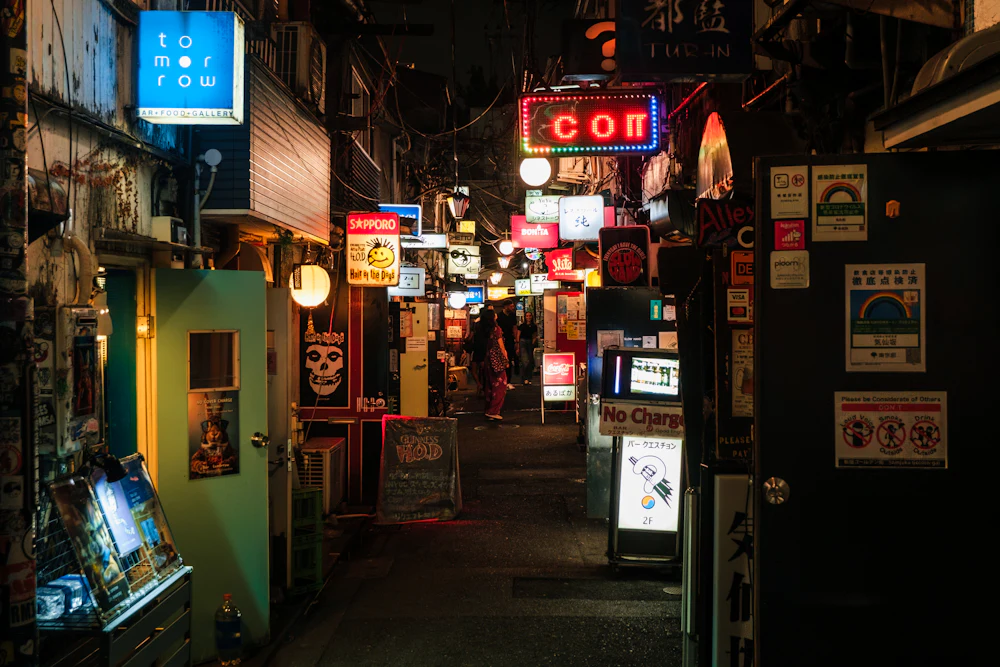
A base of regulars shows up in two very different forms. In Kabukicho's Golden Gai — a dense cluster of tiny postwar bars that grew out of the black-market alleys near Shinjuku Station — a handful of seats and a fixed community of regulars are the entire business model; strangers are welcome, but the room clearly belongs to people who keep coming back. In Yotsuya's Arakicho, a former geisha quarter that still holds a scatter of small postwar drinking spots, regulars form more quietly, over years rather than nights.
Access comes down to the terminal itself. Nearly every distinct pocket of nightlife in the ward sits within a 10-minute walk of a station exit, and Shinjuku-ku's bars keep functioning long after the last train — a rarity even within central Tokyo.
A Neighborhood Guide to Shinjuku-ku's Bars
Kabukicho — Quiet Behind the Noise
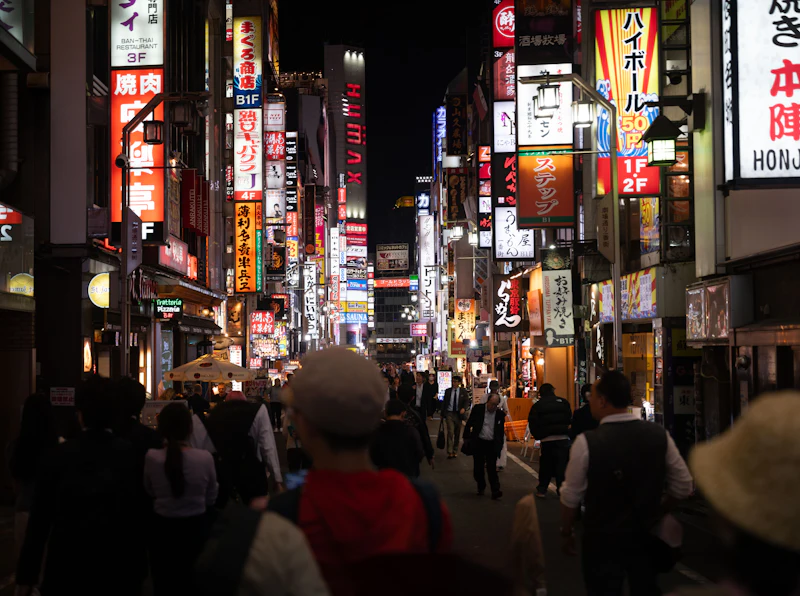
Kabukicho is where the contrast between outside and inside is most extreme in the entire ward. Neon signage and crowd noise define the main streets, but step into one of the narrow alleys and a different world opens: single-room bars, some seating no more than five or six people, where the volume drops the moment the door closes. Golden Gai is the best-known example — a grid of alleys lined with tiny bars that trace back to the jumble of postwar tenement buildings thrown up on former black-market land. A solo customer can sit at a counter here in near-total silence just steps from one of the loudest streets in Japan.
A dedicated English-language guide to Kabukicho's bar scene is planned for a future update. In the meantime, Kabukicho as a Third Place (Japanese-language article) covers the district's alley bars and their postwar layout in full.
Nishi-Shinjuku — Isolation Above the Office Towers
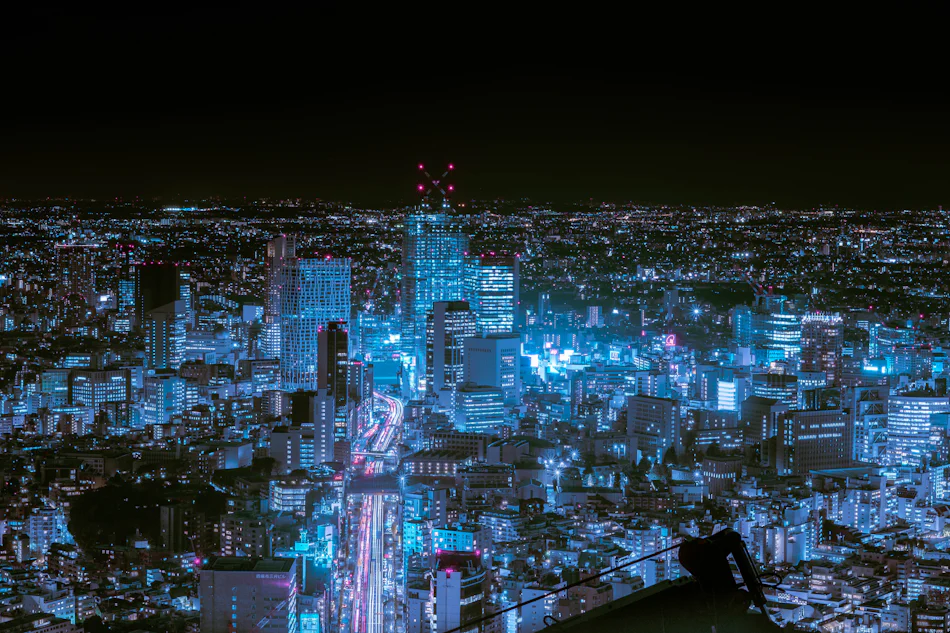
West of the station, Nishi-Shinjuku's skyscrapers empty out once the workday ends, and a different kind of bar culture takes over in the gaps: high-floor lounges with city views, small basement bars tucked between office lobbies, and a handful of alley bars that survived successive waves of redevelopment. Where Kabukicho's quiet comes from ducking out of a crowd, Nishi-Shinjuku's comes from urban isolation — being one of very few people awake inside a building built for thousands.
Yotsuya — Historical Quiet and an Older Kind of Night
Yotsuya layers three distinct identities: Sophia University, the Arakicho entertainment quarter, and the old moat that once ringed Edo Castle. Arakicho itself holds a cluster of small postwar drinking spots that have operated quietly since the years just after the war, distinct from both Kagurazaka's better-known geisha-district atmosphere and Kabukicho's density. Bars mixing government workers, university students, and longtime shop owners make this corner of the ward the closest thing Shinjuku-ku has to an old-fashioned "quiet drink" — one of the settings Third Place Japan weighs most heavily here.
Reading Shinjuku-ku's Bars Through TPJ's Seven Axes
Comfort & Sensory Quality. Scale varies more here than in any comparable ward — from a one-and-a-half-meter counter to a lounge on the 40th floor. Comfort tends to correlate less with square footage than with a clear reason for being there: a regular who came to see the owner, a traveler who came for the alley itself.
Quietness & Privacy. Shinjuku-ku carries some of the loudest street-level noise in Tokyo and, a few steps away, some of its sharpest contrasts in stillness. The ten seconds it takes to walk from Kabukicho's main street into Golden Gai, or the drop into a Nishi-Shinjuku basement bar, produces a quiet that registers by comparison rather than in absolute terms — that contrast is the axis's defining trait here.
Specialness & Non-daily Experience. Being inside "the center of Tokyo's night" carries its own weight, distinct from Ginza's sense of refinement or Roppongi's international polish. It's the feeling of standing inside the city's energy rather than observing it from outside.
Story & Empathy for Background. Golden Gai's building stock traces to postwar black-market land use; the plaza outside the station's west exit carried real weight during Japan's student protest era; Kabukicho's old cinemas and theaters date to the postwar economic boom. Sitting in a bar here means sitting inside several layers of that history at once.
Revisit & Continuity Value. Reasons to return differ by pocket: a Golden Gai regular comes back for the owner, a Nishi-Shinjuku visitor for the view, an Arakicho regular for a particular pour. That variety of motive, spread across several distinct areas, keeps pulling people back to different corners of the same ward.
Record & Share Experience. Nishi-Shinjuku's skyline and Kabukicho's neon photograph well and travel easily online; Golden Gai's alleys and Arakicho's lanterns resist the camera and circulate instead as stories told afterward. Both forms of record-keeping move through the ward in parallel.
Inbound & Multilingual Compatibility. Shinjuku Station's direct links to Narita and Haneda make it one of the first stops for many arriving travelers. Kabukicho and Golden Gai in particular appear often in international travel coverage as shorthand for "Tokyo at night," and English, Korean, and Chinese-language service is common enough in the busier pockets to lower the barrier to entry considerably.
What to Look for in a Good Bar in Shinjuku-ku
Choosing well here starts with naming what you actually want from the night, since the ward offers no single default.
For solitude, the alleys behind Kabukicho's main street or the smaller bars around Arakicho suit a quiet drink alone better than anywhere else in the ward. For a sense of the city's energy, the high-floor lounges of Nishi-Shinjuku or the livelier spots near the station deliver that without requiring much searching. For becoming a regular somewhere, the smallest, least visible bars — the ones set back from a station exit with only a handful of seats — tend to reward repeat visits the fastest.
Timing shifts the experience considerably. Past 10 p.m., Shinjuku-ku's smaller bars see fewer passersby and more people who came with a specific place in mind — this is generally when the ward's bars are functioning most fully as third places rather than as stops along the way to somewhere else.
The Neighborhood Context Behind Shinjuku-ku's Nightlife
Shinjuku-ku's registered population runs to roughly 350,000, but the night population swells to several times that figure. For a large share of greater Tokyo, "going to Shinjuku" requires no specific plan — close to the chance encounter Oldenburg described as central to a genuine third place.
That flow rarely stops. Year-end crowds, cherry blossom season, summer festivals elsewhere in the city come and go, but Shinjuku-ku's bars keep running on the same steady current of passersby — a place to return to that sits outside the rhythm of the rest of the city's calendar.
For International Visitors
Shinjuku Station's direct rail and bus links to Narita and Haneda make Shinjuku-ku one of the easiest ward-level nightlife districts to reach straight off a flight. Kabukicho and Golden Gai are used to international visitors, with enough English-, Korean-, and Chinese-language signage to make a first visit manageable without much preparation. Nishi-Shinjuku and Yotsuya ask a little more independence and reward it with a quieter, less touristed version of the ward's night.
Frequently Asked Questions
Q. Is it easy to drink alone in Shinjuku-ku?
Yes. Counter-only bars with five to eight seats are common in Kabukicho's backstreets and around Yotsuya's Arakicho, and solo drinking is the default rather than the exception in most of them. A single seat at the counter is usually the easiest table to get.
Q. How is Shinjuku-ku different from Ginza or Roppongi for bars?
Ginza's core identity is bartending craft and formal service; Roppongi's is international nightlife with a strong expat presence. Shinjuku-ku offers neither of those single identities — its defining trait is the sharp contrast between Kabukicho's noise and the quiet just behind it, a contrast Third Place Japan rates highly on the Quietness & Privacy axis specifically because of what it contrasts against.
Q. Where can I find a quiet whiskey bar in Shinjuku-ku?
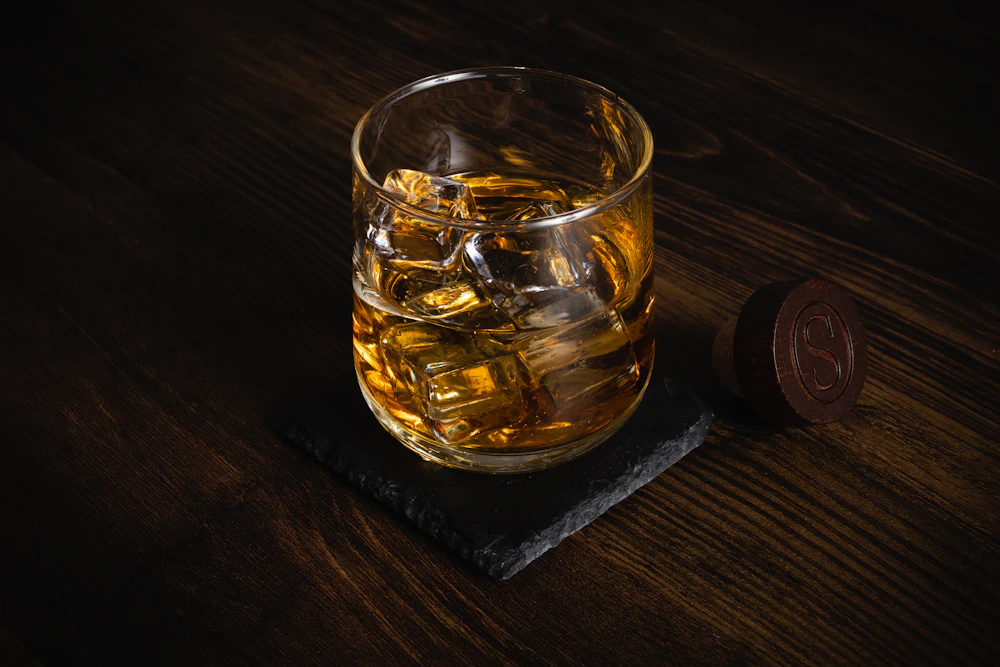
Small bars specializing in Japanese and Scotch whisky are scattered through the alleys well away from Kabukicho's main strip, and around Yotsuya. The gap between Shinjuku's reputation for noise and the existence of these quiet counters is exactly what gives the ward's whiskey bars their particular value.
Q. What's the difference between Kabukicho's bars and the rest of Shinjuku-ku?
Kabukicho runs on a two-layer structure — loud streets, quiet alleys — where the drop in volume the moment you step through a door is central to the experience. Nishi-Shinjuku and Yotsuya work through different logics: urban isolation in one case, historical quiet in the other. Having all three coexist within one ward is Shinjuku-ku's most distinctive trait among Tokyo's 23 wards.
Q. How do I get to Shinjuku-ku's bar districts?
Nearly every pocket of nightlife sits within walking distance of a Shinjuku Station exit, served by JR lines and several subway lines. Kabukicho is roughly an 8-minute walk from the east exit; Arakicho in Yotsuya is 5 to 10 minutes from Yotsuya or Yotsuya-sanchome stations on the Marunouchi Line. Late-night access is among the best in Tokyo, with taxi stands and night buses running well past the last train.
In Summary
Shinjuku-ku's bars carry a value no other Tokyo ward quite matches: a two-layer contrast between street-level chaos and alley-level stillness, several genuinely distinct versions of "night" coexisting within one administrative boundary, and a neutrality that comes from sitting at the center of the world's busiest station. Third Place Japan evaluates spaces like these across seven axes, and Shinjuku-ku's bar scene stands as a clear case of a third place built directly out of chaos rather than in spite of it.
Related reading: for the ward's food culture, Shinjuku-ku as a Third Place: Where Living Habits Shape What You Eat covers the same ward's restaurant scene, from Kagurazaka's quiet alleys to Shin-Okubo's multicultural food streets. For a wider look at how quiet functions as a third place elsewhere in Tokyo, see Meiji Jingu as a Third Place: Finding Silence in Central Tokyo.