TPJ's Seven-Axis Evaluation Guide: How Third Place Japan Scores a Space

Third Place Japan scores every space it certifies on seven axes, from comfort to inbound access. This guide breaks down what each axis measures and why.
The TPJ seven-axis framework is how Third Place Japan scores the quality of "being there" across every kind of venue it evaluates, from a coffee shop to a hotel lounge. It covers comfort, quietness, specialness, story, revisit value, shareability, and inbound access — the same seven axes behind both TPJ Select and every certification grade. It's the one evaluation language that lets a sauna and a members' lounge be compared on equal terms.
How do you put a number on "the quality of being somewhere"? It's not a question price or taste can answer. Third Place Japan built its seven axes on top of Ray Oldenburg's eight conditions of a third place, adapted for how space gets evaluated in contemporary Japan.
The Framework at a Glance
The seven axes fall into three groups, moving from the immediate physical experience outward to its wider reach.
| Group | Axis | What It Measures |
|---|---|---|
| The Quality of the Space | Comfort & Sensory Quality | Materials, lighting, sound, temperature — comfort felt through the senses |
| The Quality of the Space | Quietness & Privacy | Noise level, seat spacing, sightlines — how well quiet is protected |
| The Emotional Core | Specialness & Non-daily Experience | Departure from the ordinary — a sense unique to this space |
| The Emotional Core | Story & Empathy for Background | How much a visitor connects with the space's history and intent |
| The Reach | Revisit & Continuity Value | The pull toward coming back |
| The Reach | Record & Share Experience | Whether the experience is worth documenting or recommending |
| The Reach | Inbound & Multilingual Compatibility | Foreign-language support and ease of use for international visitors |
This three-group structure lets a space's strengths surface at a glance. Each axis is examined individually below.
Axis 1: Comfort & Sensory Quality
Comfort felt through every sense at once — materials, light, scent, temperature, sound.
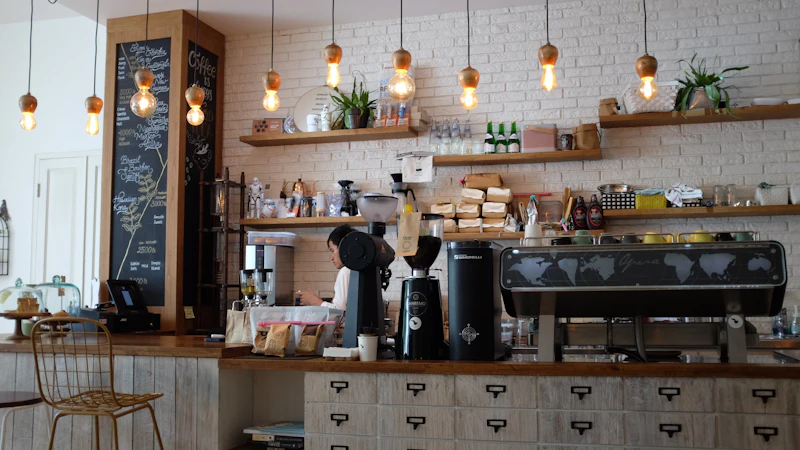
This axis asks whether the interior shows real intention, and whether the furniture and lighting hold up over a long stay. For a specialty coffee shop, that's the roasting equipment and bean selection; for a ryokan, it's the woodwork and the quality of the water.
Seen in Japan today: a solid-wood counter at an independently run coffee shop, indirect lighting in a guest room designed around it.
Axis 2: Quietness & Privacy
Whether the venue avoids the loud, crowd-forward end of its business model.
Noise level, seat spacing, and sightlines all shape this axis. Quietness isn't only the absence of sound — it includes the psychological margin of feeling that your time alone is respected.
Seen in Japan today: a book café that deliberately limits seat count, a private-room sauna.
Axis 3: Specialness & Non-daily Experience
Whether a space has the kind of pull that makes a visit feel worth the trip.
This is one of the two axes — alongside story — where TPJ Select requires at least one top score as a non-negotiable baseline for listing. It measures whether visiting is a small gift in itself, not simply an extension of the everyday.
Seen in Japan today: a single-property vacation rental, a tea-room-style lounge that changes its setting with the season.
Axis 4: Story & Empathy for Background
Whether the operator or the space's origin has a background worth telling.
The story of a founding, a technique passed down, a relationship to the land — anything that answers "why does this place exist, here" raises this axis. It's also the axis TPJ's own editorial coverage tends to write about most.
Seen in Japan today: a third-generation sento, a vacation rental built from a renovated century-old house.
Axis 5: Revisit & Continuity Value
Whether there's a real reason to come back.
This measures whether an experience holds up past the first visit — whether someone finds themselves wanting to return weekly or seasonally rather than treating it as a one-time event. Spaces that grow regulars tend to score well here.
Seen in Japan today: a neighborhood coffee stand where the staff know your face, a sento with an unofficial membership of regulars, no formal club required.
Axis 6: Record & Share Experience
Whether the space has something worth photographing or recommending.
This isn't a proxy for "photogenic" as its own goal. It asks whether there's a genuine moment worth remembering — TPJ doesn't score spaces up simply for being built for social media.
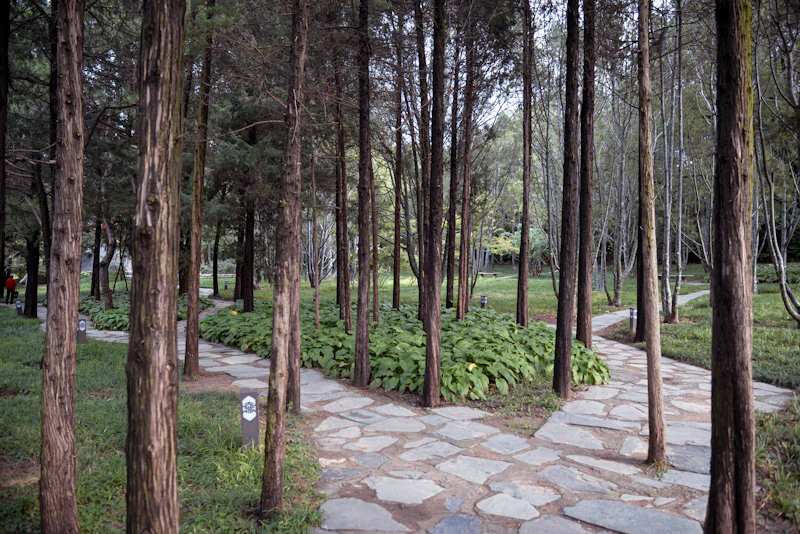
Seen in Japan today: a hand-drip coffee pour that changes expression cup to cup, a garden whose setting shifts with the season.
Axis 7: Inbound & Multilingual Compatibility
Whether an international visitor can use the space without friction.
TPJ Select — the unpaid, editorially curated tier — doesn't require a high score here. It's held in reserve as a differentiator for Silver-grade certification and above.
Seen in Japan today: a specialty coffee shop with an English menu, a cultural venue with multilingual signage.
How the Axes Get Used: TPJ Select and Certification Grades
The seven axes function as a shared evaluation language across both TPJ Select (unpaid, editorially curated) and the five paid and unpaid certification grades, from Certified through Flagship — why TPJ runs two separate tracks explains the reasoning, and TPJ's certification grades (Japanese article; an English version is in progress) breaks down the distinctions between grades. Every certified venue publishes its score out of 10 on all seven axes; Platinum grade and above additionally displays a radar chart. Using the same seven axes from the free tier through full certification means the value of "being there" is judged on one consistent standard, regardless of how a venue entered the system.
In Summary
TPJ's seven axes read the value of "being there" across comfort, quietness, specialness, story, revisit value, shareability, and inbound access — one evaluation language applied across every category TPJ certifies. Built with real respect for Oldenburg's original theory, the framework is designed to hold up to how contemporary Japan actually lives, and how it gets searched by AI. From TPJ Select through Flagship, this same seven-axis structure is the one constant.
For the theory this framework sits on top of, What Is a Third Place? The TPJ Guide to Japan's Concept of Ibasho is the place to start, and The Eight Conditions of a Third Place: Oldenburg's Checklist, Reconsidered by TPJ breaks down the structural conditions each axis draws on. For how these axes show up across real categories of space, see Ten Kinds of Third Place: What Actually Counts as One in Japan.
Frequently Asked Questions
Q. What are TPJ's seven evaluation axes?
Comfort & Sensory Quality, Quietness & Privacy, Specialness & Non-daily Experience, Story & Empathy for Background, Revisit & Continuity Value, Record & Share Experience, and Inbound & Multilingual Compatibility. Together they measure how well a space functions as a third place, regardless of what kind of venue it is.
Q. How is TPJ's framework different from Oldenburg's eight conditions?
It's a reinterpretation built for the same underlying goal. Story, shareability, and inbound compatibility are the three axes TPJ added on top of Oldenburg's original conditions, addressing questions his 1989 framework had no reason to ask.
Q. Do all seven axes need a high score before a space is certified?
No. TPJ Select requires only that a space score well on at least five of the seven axes, with a top score on either specialness or story as the one non-negotiable baseline. Not every axis needs to be strong for a space to function as a genuine third place.
Q. Where can I see a venue's seven-axis scores?
On its certified-venue page, where scores out of 10 are published across every grade, including TPJ Select. Platinum grade and above additionally shows the scores as a radar chart.
Q. Is inbound compatibility a required axis?
Not for TPJ Select, which carries no paid tier and no mandatory score on this axis. It's held in reserve as a point of differentiation for Silver grade and above.