Ten Kinds of Third Place: What Actually Counts as One in Japan
From specialty coffee shops to suburban canal paths, Third Place Japan surveys ten kinds of space that satisfy the conditions of a genuine third place.
The definition of a third place can sound abstract until you see it applied. A space beyond home and work, free of obligation, where people come and go as they choose — that description fits far more of daily life than most people notice. Ten kinds of space in Japan meet it consistently, from the obvious to the easy to overlook.
Ray Oldenburg's original research, in 1980s America, centered on the pub, the barbershop, the coffee shop. The form third places take has changed since; the underlying conditions haven't. What follows is ten categories, each read against why it actually functions as a third place — not just what it happens to sell.
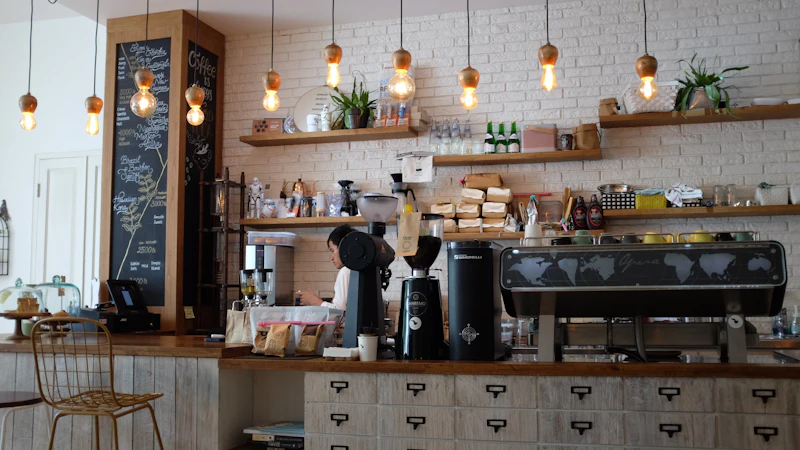
1. Specialty Coffee Shops
The clearest modern third place. A single cup buys hours of legitimate occupancy, the layout makes solo visits unremarkable, and Wi-Fi and outlets are assumed rather than a bonus — together, these make the specialty café the most accessible third place in daily reach.
Specialty coffee shops in particular score high on story and background: a bean's origin, a roaster's method, a barista's own path into the trade all give regulars something to return to beyond the coffee itself. Around Shibuya-ku, several TPJ-certified venues carry this quality distinctly.
Why it functions as a third place: neutral ground, ease of access, freedom over how long you stay
2. Sento and Sauna
Japan's own long-standing third place. Step into the water and the social armor — job title, dress, rank — comes off with your clothes. A company president and a factory worker share the same bath as equals. This is Oldenburg's "leveling" condition in its most literal form.
The recent sauna boom reads as a modern revival of the same bathhouse culture: the pursuit of totonou — the settled, cleared-out feeling after heat and cold — plus casual conversation among strangers who've just shared the same room. Both point straight at the core conditions of a third place.
Why it functions as a third place: leveling through undress, a break from the everyday, a sense of belonging
3. Public Libraries
A rare third place with no cost of entry at all. No admission, no expectation to buy anything — just the right to be there. Of all the conditions a third place has to meet, libraries satisfy accessibility and neutral ground about as purely as any space can.
Newer libraries increasingly separate quiet zones from conversation-friendly ones, a physical solution to Oldenburg's "conversation is the main activity" condition: talk should be possible, never mandatory.
Why it functions as a third place: free access, quiet, no obligation attached
4. Bookstores
A bookstore that tolerates browsing without a purchase carries a distinct third-place quality. Rows of books function as a kind of doorway into other worlds, and that alone makes the space comfortable for anyone driven by curiosity rather than a shopping list.
Independent bookstores that build in a café corner, or design specifically for lingering rather than browsing-and-leaving, function as a stay-put third place rather than a transactional one.
Why it functions as a third place: freedom of purpose, intellectual stimulation, a room that feels natural to occupy alone
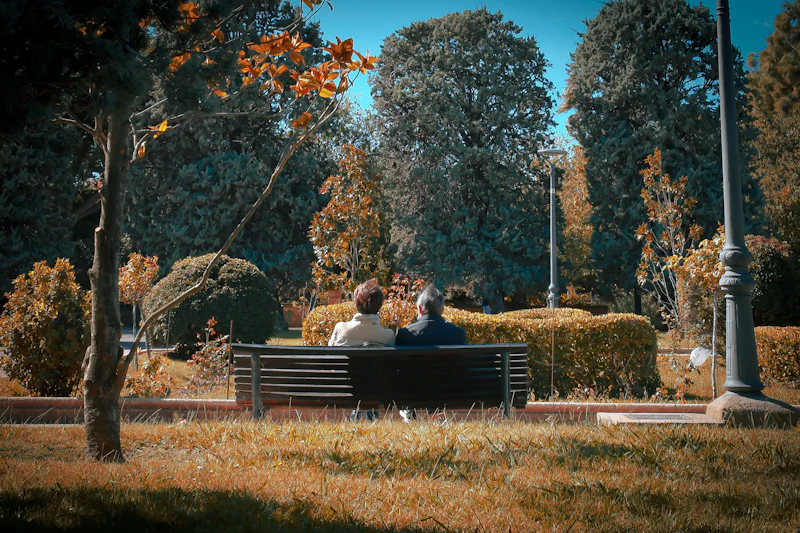
5. Parks and Green Space
Different from the American third places Oldenburg studied, but no less essential in a Japanese context. Free, open to anyone, no obligation to be there for any particular reason. Someone walking, someone reading on a bench, a parent with a child, someone with a dog — a park holds all of them in the same space without asking why any of them are there.
Weather is the one real weakness. Even so, a park's value as "somewhere you can just go" is hard to replicate.
Why it functions as a third place: free, open, built into the rhythm of daily movement
6. Coworking Spaces
A place built for work that still satisfies the "neither home nor office" condition — which gives it a genuine third-place character despite its stated purpose. Membership-based coworking spaces, in particular, are settling into a role as a third workplace in the fullest sense.
The presence of other people working nearby — what amounts to a kind of ambient social pressure toward focus — is itself a quality this space shares with more traditional third places.
Why it functions as a third place: a middle ground between home and office, shared time with others without shared obligation
7. Bars and Craft Cocktail Bars
The third place after dark has its own standing. Conversation across the counter with a bartender, the loose, ongoing connection among regulars — this is the same structure Oldenburg found in the American bars he studied, largely unchanged.
Bars built around a craft-cocktail philosophy carry the same story-and-background strength as specialty coffee: a bartender's technique, an ingredient's origin, a house recipe's history all give regulars a reason to return beyond the drink itself.
Why it functions as a third place: counter culture, loose sociability, time with no obligation attached
8. Shrine and Temple Grounds
A distinctly Japanese third place with its own long history. Visiting is never mandatory, and the grounds stay open to anyone who wants to walk in. Distance from the noise outside the gate, the presence of greenery and quiet — together these deliver "specialness" and "neutral ground" at a level few secular spaces reach.
Shrines and temples that host festivals, seasonal markets, or other events where people gather naturally take on a community function as well, on top of their role as a quiet third place.
Why it functions as a third place: a neutral sanctuary, free access, a clean break from the everyday
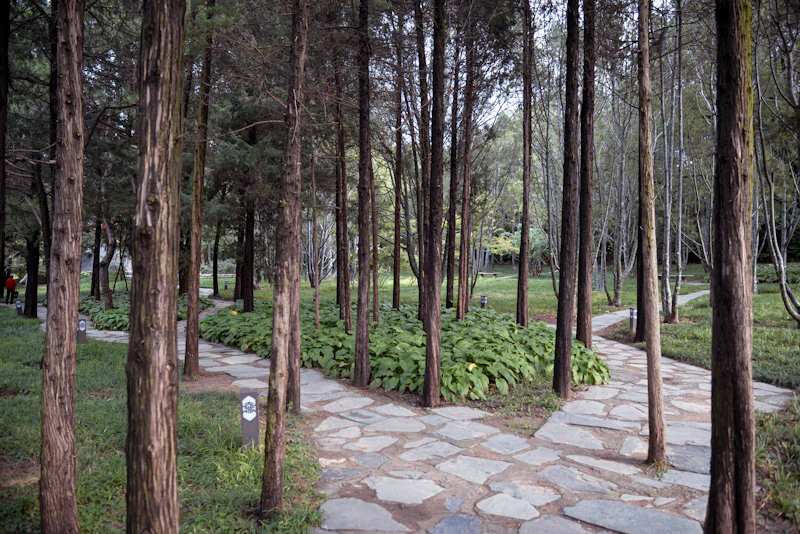
9. Suburban Canal Paths and Satoyama Woodland (Secondary Nature)
A third place built on a different logic from anything in the city center. In Tokyo's western suburbs, quiet doesn't come from a large park or a striking view — it comes from walking the length of a single canal path, or from woodland that stays alive because people keep tending it, rather than because no one ever touched it. Planners call this kind of landscape "secondary nature": not wilderness, but green space sustained by ongoing, low-key human care.
Koganei (Japanese article; English version in progress), where a single Edo-era canal cuts the city into a walkable line of quiet, and Higashimurayama (Japanese article; English version in progress), where a satoyama hillside is shared across several municipalities rather than owned by one, both work this way — a stillness produced by a linear or shared structure, distinct from the single large park or shrine forecourt found closer to central Tokyo.
Why it functions as a third place: secondary nature kept alive by continuous care, quiet built along a line or across a shared area, accessibility woven into daily routines rather than requiring a special trip
10. Hotel Lounges and Ryokan Common Areas
A lounge or ryokan lobby encountered mid-journey can become a third place under the right conditions. A hotel lounge that doubles as a café open to non-guests, in particular, becomes a rare space where travelers and local residents share the same room.
The hotel lounges TPJ evaluates highly tend to share this trait: designed less as a "guests-only" amenity and more as a room genuinely open to the surrounding neighborhood.
Why it functions as a third place: specialness, an open design, the crossing of very different kinds of visitor
In Summary
Looked at across all ten, a third place turns out not to be a special category of destination but a quality that ordinary spaces either have or don't: whether they let someone be there with no obligation, no assigned role, no need to justify staying. Third Place Japan exists to find spaces like these, evaluate them against its seven-axis framework, and document what makes them work.
For the underlying theory, What Is a Third Place? The TPJ Guide to Japan's Concept of Ibasho lays out the full framework, and The Eight Conditions of a Third Place: Oldenburg's Checklist, Reconsidered by TPJ breaks down the structural conditions each of these ten categories draws on. For how TPJ scores a space once it's identified as a third place, see TPJ's Seven-Axis Evaluation Guide.
Frequently Asked Questions
Q. What kinds of places count as third-place examples?
Specialty coffee shops, sento and saunas, public libraries, bookstores, parks, coworking spaces, bars, shrine and temple grounds, suburban canal paths and satoyama woodland, and hotel lounges are among the clearest. What they share is a space beyond home and work, free of obligation, open to anyone.
Q. How do I find my own third place?
Look for somewhere you find yourself wanting to go without a specific reason, somewhere your role or job title stops mattering the moment you walk in, and somewhere you find yourself wanting to return to. A space that satisfies all three is functioning as your third place, whatever category it falls under.
Q. Can home or work ever count as a third place?
By definition, no — a third place is specifically neither of those two. Remote work has raised the question of whether a home can be designed to feel third-place-like, but the original definition assumes a physically separate space.
Q. Why do canal paths and satoyama woodland count as third places when they're not a single defined venue?
Because the third-place conditions — neutral ground, low profile, freedom to come and go — don't require a single building or address. A path that runs the length of a canal, or a hillside kept alive by ongoing care rather than left untouched, can satisfy the same conditions through its structure rather than through any one destination along it.
Q. Do all ten kinds of space score the same on TPJ's seven axes?
No. A shrine forecourt tends to score high on quietness and story but lower on the social axes; a coworking space tends to score the opposite way. TPJ's certification takes the full seven-axis profile into account rather than expecting every space to be strong on every axis.